La información siempre resulta importante, nos da perspectiva y se puede encontrar en ella la trayectoria de lo que hacemos como parte de un grupo específico, síguenos y suscríbete para formar parte del escenario donde compartimos ideas y buscamos alternativas en Asgardia, nuestra nación espacial https://asgardia.space/en/
La sesión se centró en los desarrollos clave y los próximos eventos relacionados con Asgardia, incluyendo el Congreso del Ejecutivo Escocés en Dubai y una sesión digital programada para finales de septiembre.
Lembit Opik enfatizó la importancia de presentar los documentos legislativos de manera puntual para asegurar su inclusión en las discusiones. También destacó el Foro Legislativo de Asgardia y la Conferencia de la Directiva Principal, que son cruciales para dar forma a la gobernanza futura en el espacio. Se animó a los participantes a interactuar con los medios locales para promover la misión de Asgardia y aumentar la conciencia pública.
John Fine discutió la necesidad de una Directriz en el proyecto denominado Galactic Prime Directive para establecer un marco legal para la exploración espacial, criticando el estado actual no regulado como si fuera el «lejano Oeste». Expresó preocupaciones sobre los desechos espaciales y las implicaciones del primer contacto con vida extraterrestre, subrayando la importancia de una gestión responsable en el espacio.
Se esbozó la próxima conferencia del 20 de septiembre, con una convocatoria especial para que los participantes participen en discusiones sobre el futuro de la humanidad en un universo poblado. Lembit reforzó la importancia de este evento e indicó planes para informar a los líderes.
El estado de Asgardia TV fue un importante punto de preocupación, con Lembit y John expresando frustración por su cesación de transmisiones y la falta de comunicación por parte del ministro de Información y Comunicación.
Reconocieron la importancia de la plataforma y la necesidad de transparencia respecto a las contribuciones financieras en los proyectos. La discusión destacó la necesidad de una comunicación abierta y la resolución de estos problemas antes de la reunión en Dubai, con Lembit planeando hacer un seguimiento sobre las estrategias mediáticas y futuras colaboraciones para mejorar la visibilidad de Asgardia.
La discusión se centró en mejorar las estrategias de divulgación y participación de Asgardia, especialmente a la luz del próximo Congreso Ejecutivo en Dubai.
Lembit Opik elogió el foro LEGISLATIVO de Asgardia por su iniciativa en la gestión de interacciones extraterrestres y dio la bienvenida a Teresa Jones como la nueva presidenta del Comité de Ciudadanía. Subrayó la importancia de la colaboración e instó a los miembros a conectarse con posibles socios para fomentar el crecimiento.
Opik destacó la necesidad de una visión unificada para atraer a partidarios y animó el uso de redes sociales, específicamente Instagram, para amplificar la presencia de Asgardia. Hizo un llamado a la participación proactiva de todos los presidentes e invitó a los espectadores a unirse a Asgardia, esbozando los beneficios de la membresía, incluidos los derechos de voto y la candidatura parlamentaria, mientras expresaba su agradecimiento por los esfuerzos continuos hacia sus metas colectivas.
Bien, tomando en cuenta la iniciativa de colocar nuestros sentimientos e intenciones o tal vez interrogantes como Asgardianos, ya hice lo propio con una video:
Ohou!! A todos los residentes de Asgardia
Lembit Opik destacó el éxito del foro Asgardiano acerca de la directiva galáctica, cuyo objetivo es establecer directrices para la interacción con la vida extraterrestre.
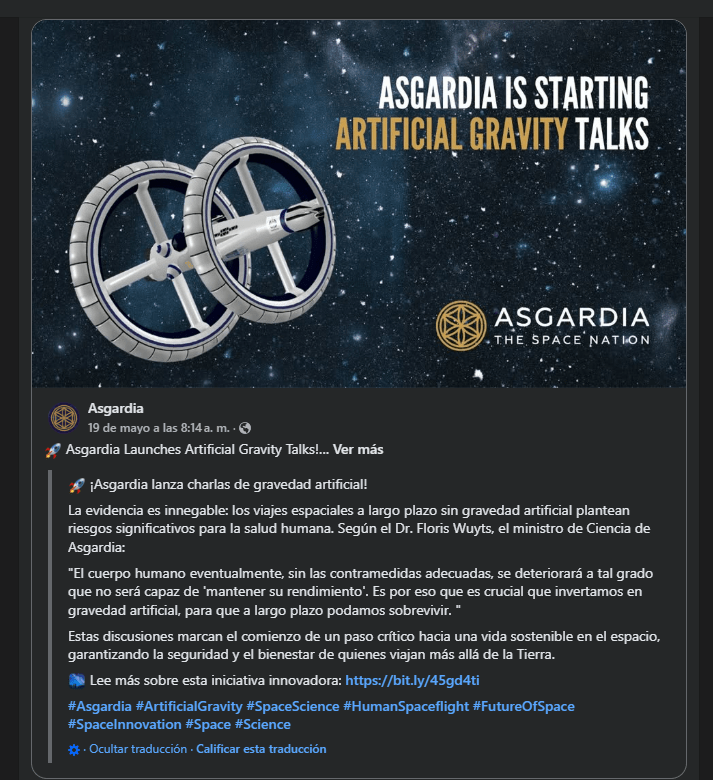
Space agencies and groups seeking to engage with bold and encouraging models in favour of space are shaping the story we tell ourselves.
Asgardia has a series of guidelines, and many of them could change over time, but one thing is certain: orbit and space deserve substantial change to prevent us from repeating what we’ve done in different parts of the planet, which hasn’t helped us live in harmony.
To the esteemed residents of Asgardia, I extend my warmest regards
As we are approaching the Summer Solstice, we would like to wish you Happy Solstice, enjoy the longest day of the year!
We would also like to welcome the new members.
We send out a newsletter like this every month, while you can read the past newsletters, watch the past meetings, and have access to other educational material at:
We organise meetings dedicated to new ExoClock members. These meetings are held just after our regular monthly meeting. The beginner’s meeting is usually held on a Friday, one or two weeks after the monthly meetings. In these meetings, newcomers can ask questions of any level related to the operation of the website, observations of transits, data analysis etc. Note that these meetings are not recorded.
1.3. Euro planet Iberian Node Award for amateur astronomers
1.4. Synchronous observations campaigns
2. Highlighted Observations
3. Exoplanet CV of TrES-2b
1
1. Announcements
1.1 ExoClock publication
We are excited to share that we have submitted our latest paper entitled:
“ExoClock Project IV: A homogeneous catalogue of 620 updated exoplanet Ephemerides”
The extensive analysis indicated that about 45% of the Ariel targets needed updates, showcasing the importance of ExoClock for the mission’s success.
Currently, we are waiting for the response of the reviewers, and we will come back to you when we have updates.
If you are a co-author and have requested additional authors to be added, we will contact you next week to take action before we submit the revised version.
Stay tuned!
1.2 Fifth Annual ExoClock Meeting
We are very excited about this year’s annual ExoClock meeting, which will take place in Madrid in a hybrid format, on the 3rd and the 4th of October 2025.
This event is a fantastic opportunity for the ExoClock community to come together, connect with other members, Ariel scientists, deepen our understanding of the project and the mission, and of course, have fun.
We are eagerly awaiting to see you in person, and for those that are unable to make it, you can still participate online!
If you wish to be considered for the visit at the Royal Observatory of Madrid, please indicate it on the registration page.
Registration is mandatory for participation, and a fee of €50 is required for in-person attendance. We will send a follow-up email for the payment, closer to the meeting.
The abstract submission deadline is the 30th of August!
Please share the meeting with any interested communities!
2
1.3 Euro planet Iberian Node Award for amateur astronomers
Congratulations to the team of Sabadell for receiving the Iberian Award for amateur astronomers for their collaboration with ExoClock! We are very proud of you!
Synchronous Observations are used to notice simultaneously transit observations of challenging exoplanet targets to increase the S/N. These are often cases where single-site observations may be insufficient due to low signal-to-noise ratios, long transit durations, or other observational difficulties.
By observing the same transit from multiple locations at the same time, we ensure better coverage and data reliability, helping to confirm transits and refine ephemeris for otherwise hard-to-characterize systems.
In our previous campaigns, we covered TOI- 5704b and TOI-2136b.
We are currently analysing the data, and we will share some brief updates on the next meeting. We will have another campaign on the 10th of July for Kepler-411c, a high-priority target. Please note down the date and if you have clear skies, go ahead and observe it!
• The transit happens between Thursday the 10th of July, 23:19 UTC and Fridaythe 11th of July 02:54 UTC.
• Use a red photometric filter, a luminance filter, or no filter at all. • Join the campaign if you have a telescope of 12 in. or larger.
3
• Remember that the transit will not appear in your scheduler! To check whether the transit is observable from your location at the exact time, please consider using the exo-worlds-spies scheduler: https://www.exoworldsspies.com/en/scheduler/ You have to indicate a telescope of 40 inches (ca. 1 metres); otherwise it will not appear.
• If you manage to observe the transit, please submit the light curve as usual to ExoClock and include the comment: “This is part of the synchronous campaign”.
2. Highlighted observations
We would like to thank you all for the observations you contributed during the previous months! We have selected WASP-148b, a target that was initially flagged as an alert, due to a shift of 10 minutes that was identified through your observations. The planet’s observations were highlighted in our June newsletter three years ago (2022!). This time we highlight the target for the additional observations and the long coverage that allowed to flag it a target with TTVs. You can clearly see on the O-C diagram the planet’s TTVs, which is because the planet is part of a multiplanetary system, and this is also described in our latest paper.
A couple of recent examples are shown below:
Congratulations to everyone for the continuous monitoring!
4
3. ‘Exoplanet CV of TrES-2b’
These CV articles aim to enrich your background knowledge on the Ariel candidates. The articles feature one exoplanet each month and are written by our literature team. This month we are featuring TrES-2b. The article is attached in the next page. Enjoy.
Clear Skies,
the ExoClock team
5
“CV” of TrES-2b
by Alex Capildeo, ExoClock Literature Team Member
Meet TrES-2b — The Darkest Known Exoplanet.
Imagine a planet so dark it barely reflects any light at all. That’s TrES-2b — a strange and fascinating exoplanet discovered in 2006 by the Trans-Atlantic Exoplanet Survey. Classified as a hot Jupiter, TrES-2b is a gas giant about the size of Jupiter, but it orbits extremely close to its star — much closer than Mercury orbits our Sun. In fact, it orbits around its star in just 2.47 days. (O’Donovan et al. 2006). It was also the first exoplanet observed by the Kepler Space Telescope, which is why it’s sometimes called Kepler-1b.
TrES-2b is likely tidally locked, meaning one side always faces the star while the other side remains in eternal night. This creates extreme temperature differences between its hot day side and freezing cold night side.
But what really makes this planet stand out is how incredibly dark it is. TrES-2b is the darkest exoplanet ever found. It reflects almost no visible light — nearly everything that hits it gets absorbed. Some studies estimate its albedo (which is a measure of the reflectivity) to be as low as 2%, or even under 1% (Kipping & Spiegel 2011; Estévez et al. 2013). For comparison, Earth reflects about 30% of the sunlight. That means that TrES-2b is at least 15 times darker than our planet. It’s like a giant ball of charcoal drifting through space.
So how do astronomers measure this? They use a technique called secondary eclipse observations. When the planet passes behind its star from our viewpoint, astronomers compare the total light before and during the eclipse. This allows them to isolate the planet’s contribution and determine how much light it reflects.
Recent studies suggest that TrES-2b may be experiencing transit timing variations (TTVs), where its orbital timing subtly shifts over time (Biswas et al. 2024). This could indicate the gravitational influence of another, as yet unseen, planet in the system — a hidden companion waiting to be discovered. However, there is no strong evidence, and therefore more observations are needed to confirm whether TrES-2b has TTVS.
TrES-2b is a well-studied target in the ExoClock project, with 119 observations, including 23 recent ones (as of June 2025). You can see all data points on the O-C diagram below (figure 1). Its bright host star and short orbital period make it possible to observe, even with telescopes as small as 5 inches (ca. 13 centimetres).
While it might currently be considered a low-priority target, its unique darkness, potential orbital changes, and mysterious atmosphere make it a fascinating object to keep watching.
6
Figure 1: The O-C diagram of TrES-2b from the ExoClock database. TrES-2b is one of the most thoroughly observed exoplanets, with extensive data collected from space missions, scientific literature, and numerous contributions from the ExoClock community.
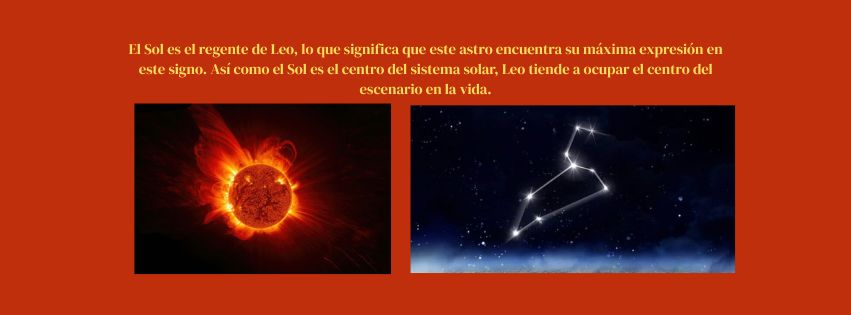
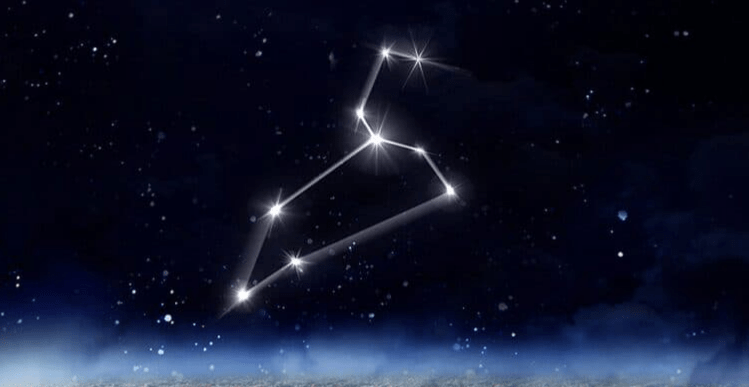
La constelación de Leo es una de las más reconocibles en el cielo nocturno, representando la figura de un león majestuoso. Se encuentra en el hemisferio norte y es visible principalmente entre marzo y mayo
Su estrella más brillante es Régulos, conocida como el “pequeño rey”, que marca el corazón del león
Leo está estrechamente vinculado con la mitología griega, en particular con el León de Nemea, una criatura invulnerable que Hércules derrotó en el primero de sus doce trabajos. Esta historia refuerza el simbolismo de Leo como un signo de valentía, fuerza y liderazgo.
Si nosotros celebramos el día de la unidad, el 1 de Leo, esto significa que lideramos con la unidad y eso es maravilloso. La unión de nuestras fuerzas y la colaboración entre individuos son esenciales para lograr un propósito común, y cada año, en esta fecha, nos recordamos el poder que tenemos cuando trabajamos juntos.
A través de actos de solidaridad y convivencia armoniosa, podemos fortalecer nuestros lazos y construir un futuro más brillante para todos. En este día tan especial, nos unimos no solo en teoría, sino también en acción, promoviendo una cultura de inclusión y respeto que trasciende las diferencias que nos pueden dividir.
La sesión incluyó debates sobre el próximo Congreso Ejecutivo, programado para el 29 de octubre en Dubai, donde los presidentes de los comités presentarán sus logros y planes futuros. Lembit Opik abordó la vacante en el Comité de Ciudadanía debido a la renuncia de Bridget y enfatizó la necesidad de que el Grupo de Revisión de Méritos Legislativos, liderado por John Fine, se centre en la legislación esencial. Peter Maughan expresó su entusiasmo por el Congreso y su confianza en los esfuerzos del comité.
Opik señaló la importancia de fomentar la colaboración entre los miembros del comité y la comunicación con los líderes regionales de actividades espaciales para mejorar la visibilidad de Asgardia.
Se informó sobre las iniciativas en curso, incluyendo la legislación educativa que está redactando Sebahattin Devecioğlu, y los planes para una futura reunión para debatir el establecimiento de una embajada en Turquía.
Se reiteró la importancia de alcanzar los objetivos para la fecha del Congreso, y se hizo un llamado a los presidentes de los comités para que compartan sus contactos gubernamentales para apoyar las iniciativas de comunicación.
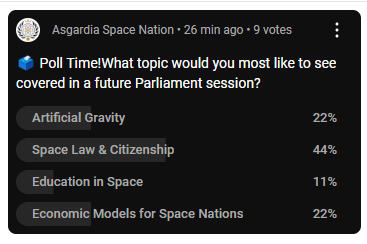
Por su parte, Rebekah Berg, anunció que se colocó una encuesta en YouTube durante la sesión de preguntas y respuestas.
Preguntas clave:
¿Cuál es el estado de las presentaciones de todos los presidentes para el Congreso Ejecutivo?
¿En qué aspecto específico debería centrarse cada comité para mejorar el perfil de Asgardia?
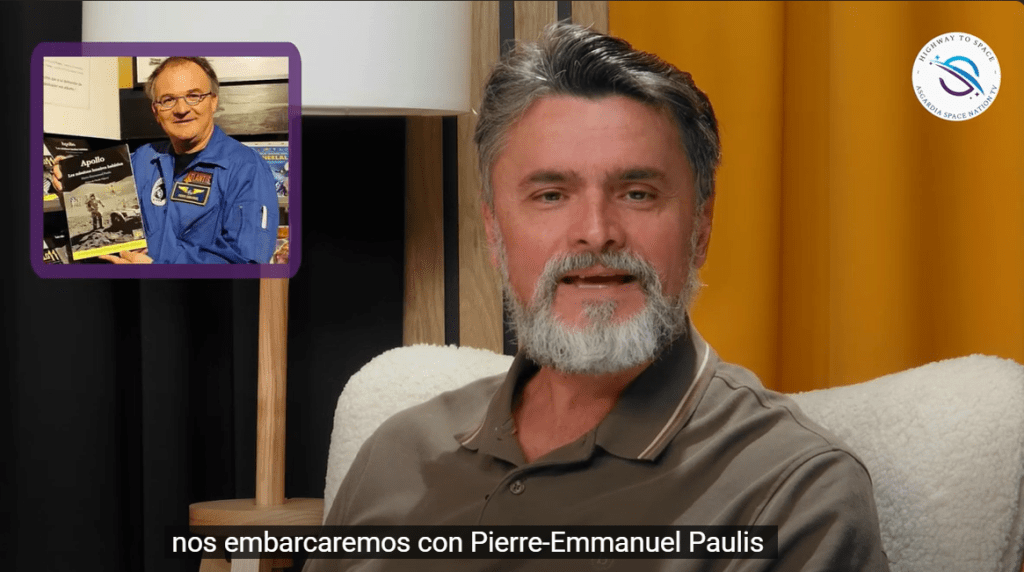
Estamos invitados Asgardianos y seguidores, un momento muy especial es este maravilloso mes. Les invito a leer las palabras del ministro de educación, conductor y productor de Autopista al Espacio.
¡Este junio, los cómics se unen al cosmos! Únete al presentador Dan Profir para dar la bienvenida a Pierre-Emmanuel Paulis —instructor de astronautas, dibujante de cómics, defensor de la educación espacial y presidente de la Mars Society Belgium— en un episodio muy especial de Autopista al Espacio.
Descubre la historia detrás de TANIA, Astronauta Europea, la querida serie de cómics que da vida al espacio desde 1997. Descubre cómo Pierre-Emmanuel utiliza el arte, la narrativa y la formación práctica para inspirar a las futuras generaciones de exploradores.
El episodio completo se emitirá el 17 de junio de 2025 a las 12:00 p. m. UTC.
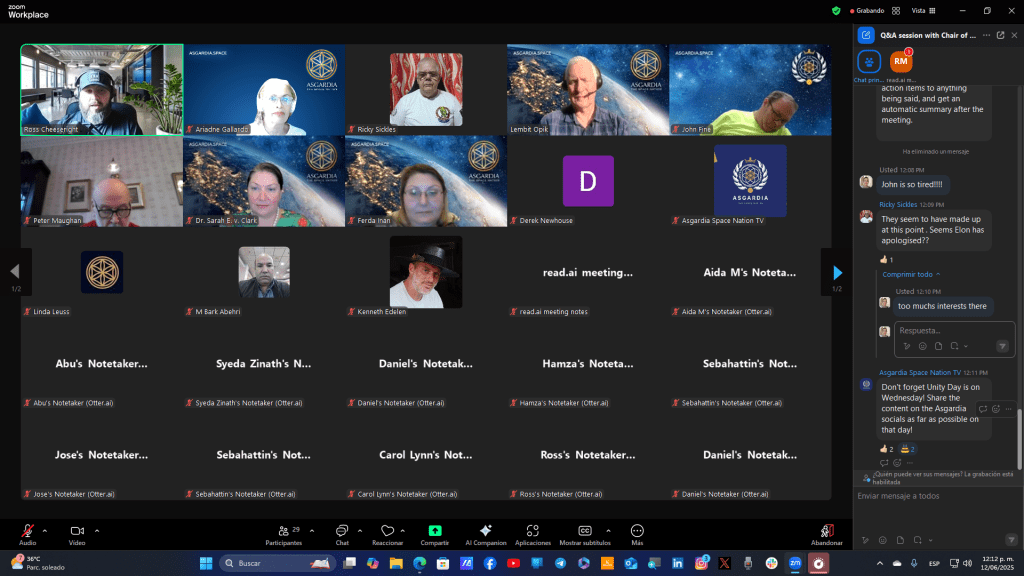
La sesión incluyó una sesión de preguntas y respuestas con el presidente del Parlamento, en la que se debatieron diversos temas relacionados con la gobernanza de Asgardia y sus futuras iniciativas. Lembit Opik proporcionó actualizaciones sobre la documentación digital de las sesiones, indicando que dos elementos legislativos fueron reclasificados como protocolos para agilizar los procesos.
Propuso una convención global sobre la directiva galáctica para mejorar la participación de Asgardia en asuntos extraterrestres y se comprometió a compartir más detalles con las partes interesadas relevantes. Además, destacó la oportunidad de pronunciar un discurso para la Sociedad Interplanetaria Británica y animó a los presidentes de los comités a preparar propuestas para el próximo Congreso Ejecutivo en octubre.
Peter Maughan informó sobre las discusiones de una reunión de presidentes de comités, centrándose en la directiva principal galáctica y una próxima reunión significativa en Dubai.
Dra. Sarah E. v. Clark reconoció la aprobación exitosa de la ley tributaria y dio crédito a su equipo por sus esfuerzos. John Fine planteó preguntas sobre los arreglos de viaje para el Congreso Ejecutivo, que fueron abordadas por un participante de la sala de conferencias.
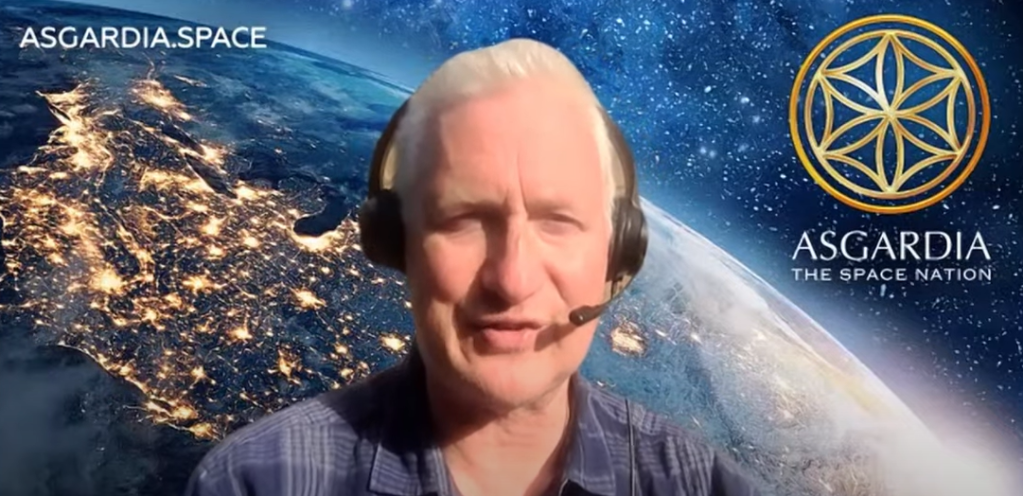
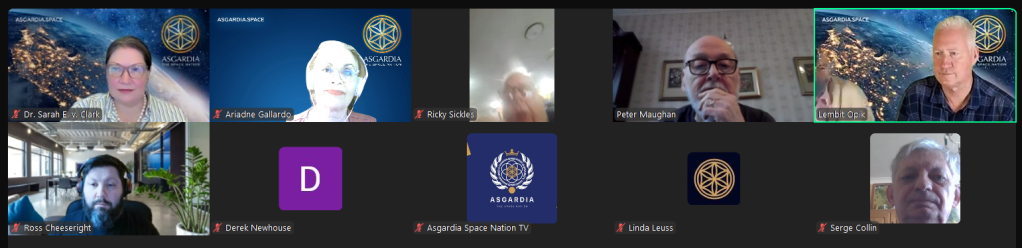
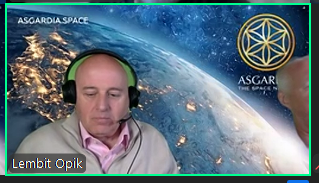
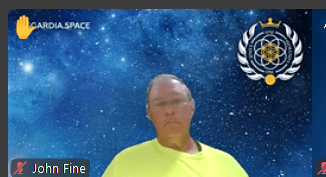
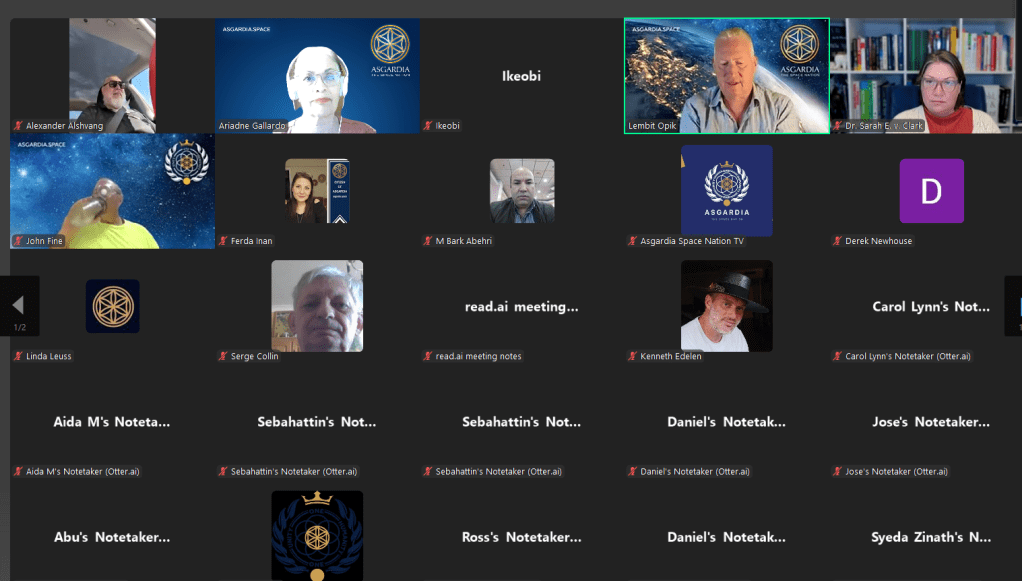
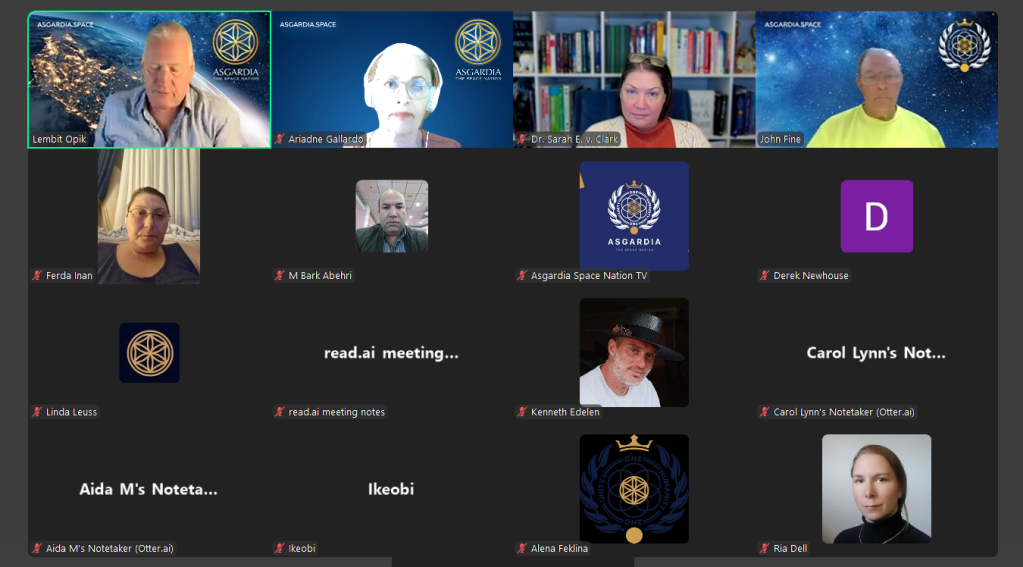
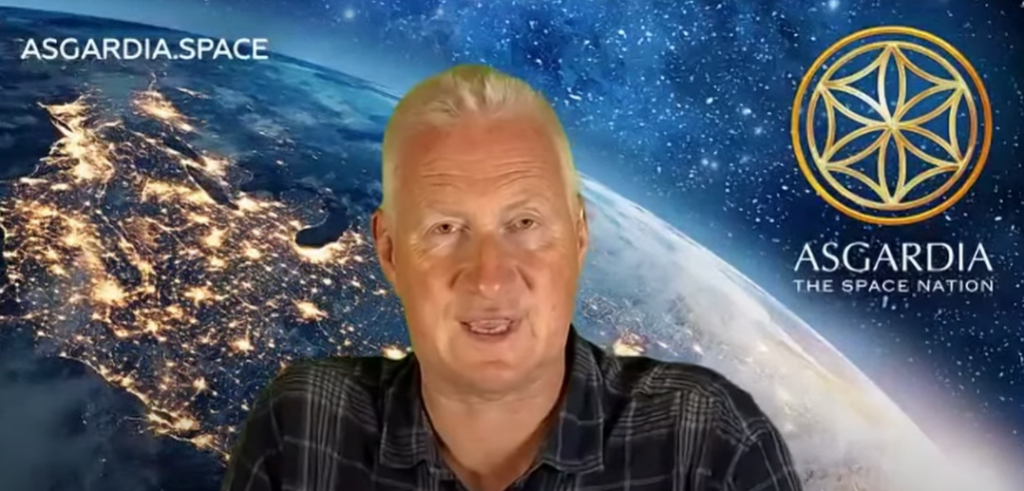
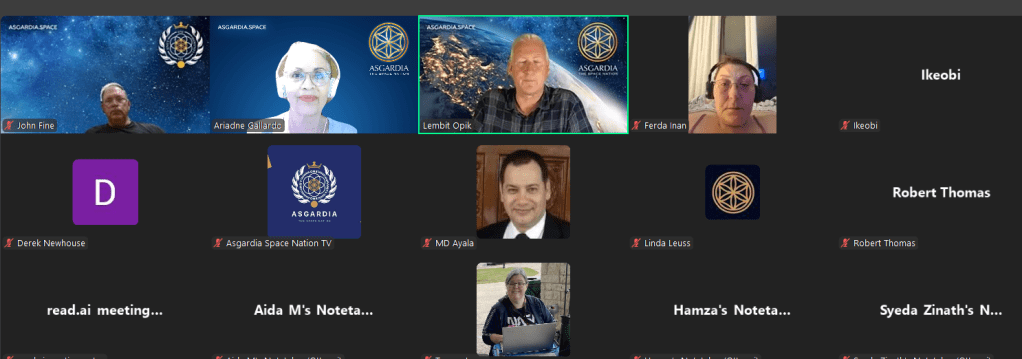
Aquí vemos al político inglés en la reunión utilizando la cámara en la reunión virtual del presidente del parlamento, Lembit Opik y compartiendo su beneplácito por acompañarnos.
También se aplaudió la participación de Keith Price como miembro Asgardiano del Parlamento, por su enfoque para mejorar las actividades parlamentarias.
La sesión concluyó con un participante de la sala de conferencias, instando a los presidentes de los comités a preparar contribuciones sustanciales para el 28 de octubre y enfatizando la importancia de mostrar los logros en el Congreso Ejecutivo.
Acompáñanos en la reunión que se graba cada jueves:
El argumento de la conferencia de este año es El contexto rápidamente cambiante del espacio global y se centrará en los desafíos y cuestiones emergentes que presenta el aumento de las actividades financiadas comercialmente, los avances en la tecnología y los rápidos cambios recientes en las relaciones internacionales:










 A couple of recent examples are shown below:
 Congratulations to everyone for the continuous monitoring!