Nuestro camino como asgardianos, un reto que sigue adelante
Autor: Ariadne Gallardo Figueroa
La información siempre resulta importante, nos da perspectiva y se puede encontrar en ella la trayectoria de lo que hacemos como parte de un grupo específico, síguenos y suscríbete para formar parte del escenario donde compartimos ideas y buscamos alternativas en Asgardia, nuestra nación espacial https://asgardia.space/en/
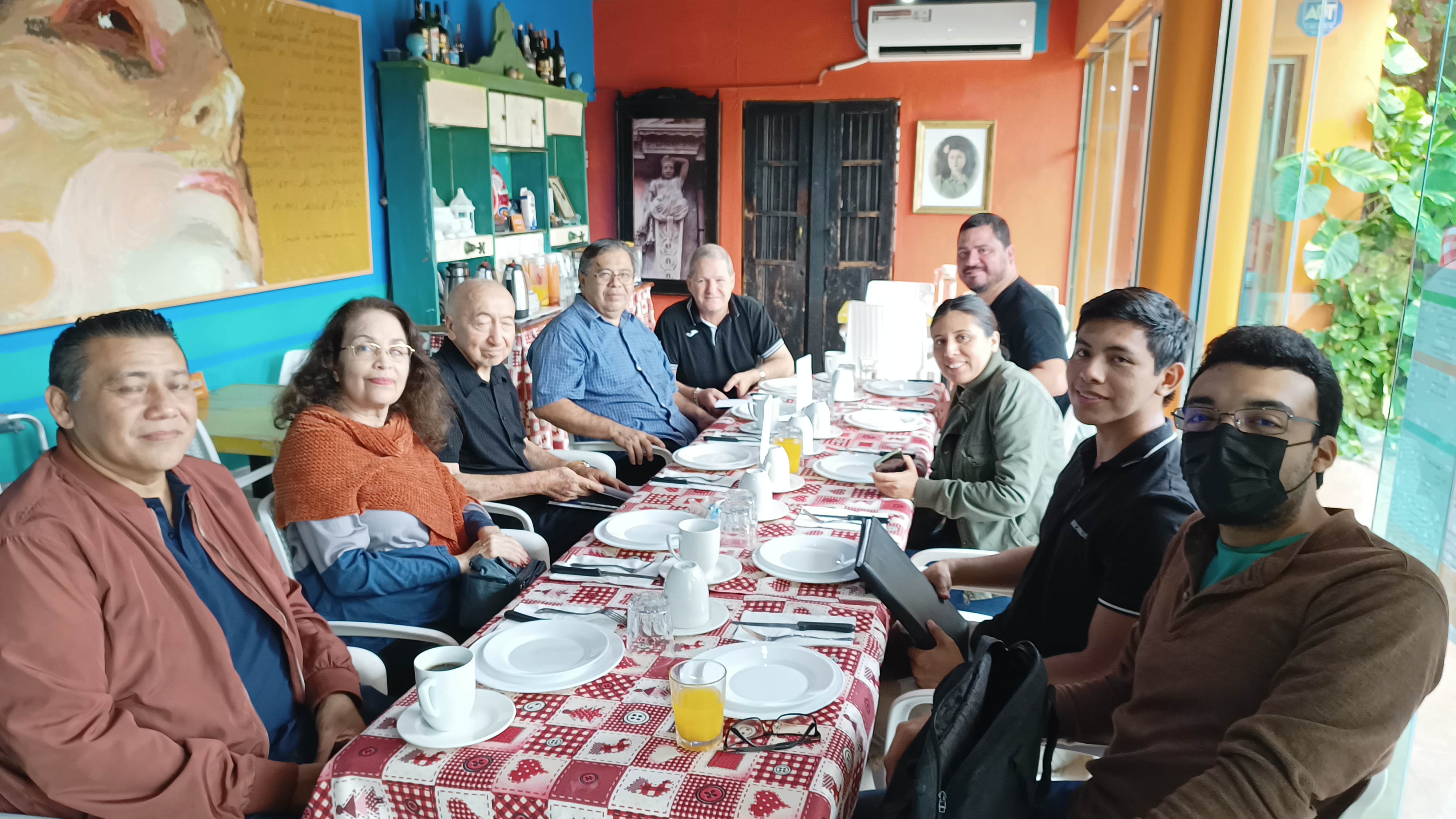
En la reciente rueda de prensa que nos ha ofrecido el profesor Eddie Salazar Gamboa, nos ha entregado material que puedes observar y, si lo deseas, detener el video para poder observar y estudiar a detalle los datos proporcionados.
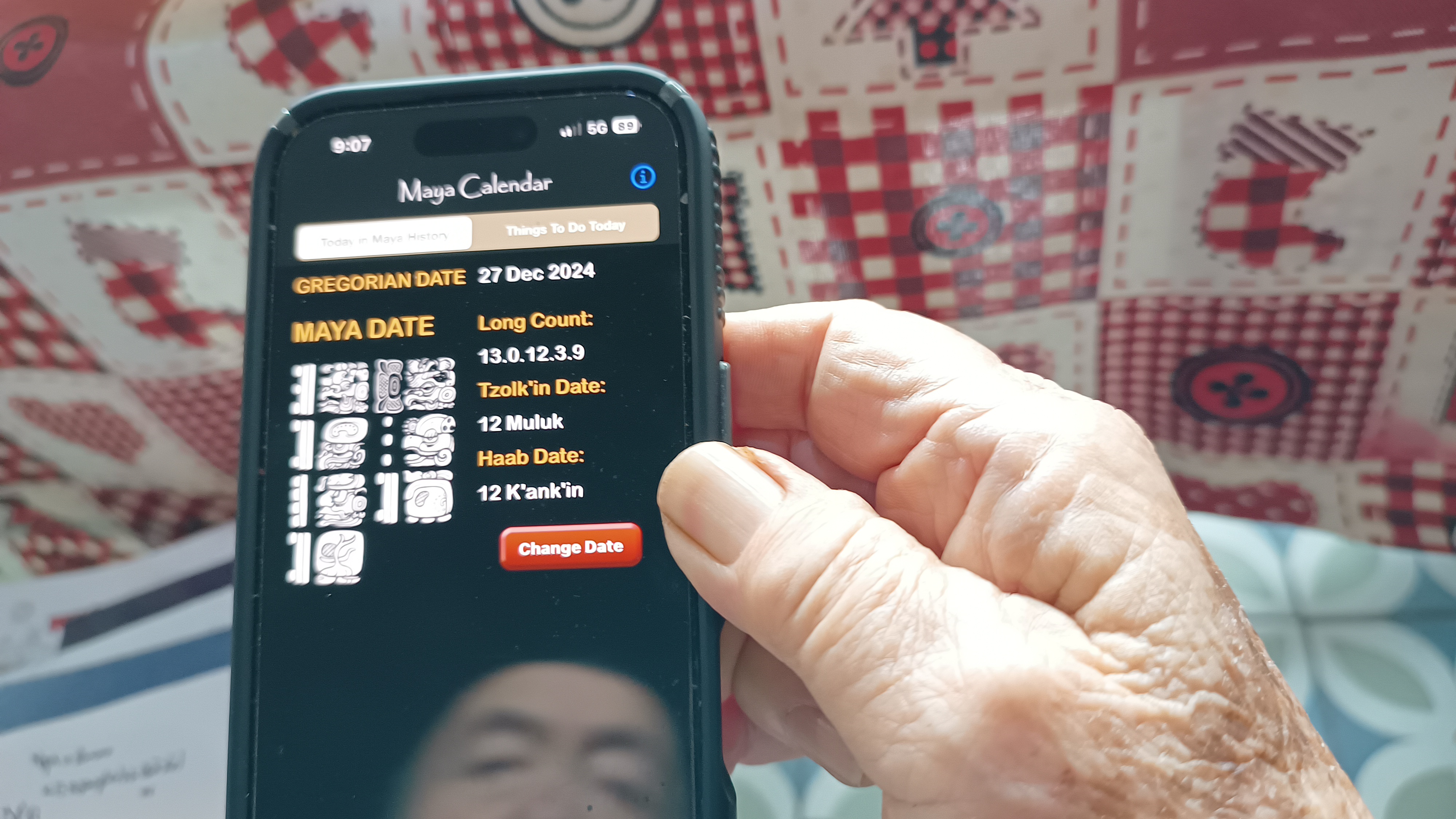
El profesor Salazar Gamboa prepondera el valor del calendario maya y nos muestra su expresión en una de sus aplicaciones móviles
A tour of the fundamental data that has been created over time since 2019, which started this program called ExoClock that aims to search for exoplanets. As we could see, the largest number of participants were from France, and it was really fun to accompany them in this happy event with which they say goodbye to the year 2024, joining the party was special.
Siga las noticias de la ceremonia de entrega del certificado programada para el 26 Capricornio (27 de diciembre).
DOS MUJERES PIONERAS EN SIRIUS 21 Y 23, CIENTÍFICAS Y RELATORAS DE UN CAMINO QUE ENGRANDECE A ASGARDIA. AQUÍ VEMOS A VICTORIA KIRICHENKO Y KSENIA ORLOVA JUNTO AL JEFE DE NUESTRA NACIÓN, DR. IGOR ASHURBEYLI.
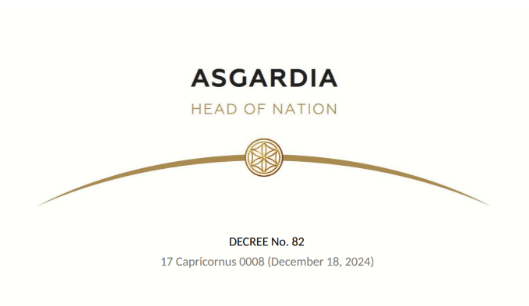
El 17 Capricornio 0008 (18 de diciembre de 2024) el Jefe de la Nación de Asgardia, Dr. Igor Ashurbeyli, emitió el Decreto n.º 82 por el que se le otorgaba a Ksenia Orlova el Certificado de Reconocimiento del Jefe de la Nación de Asgardia por su contribución a las actividades de investigación científica como tripulante del experimento de aislamientoSIRIUS-23.
El experimento SIRIUS-23, llevado a cabo por el Instituto de Problemas Biomédicos (IPBM) en colaboración con Asgardia, tenía como objetivo estudiar los efectos de los vuelos espaciales de larga duración. Dichos estudios son esenciales para cumplir la principal misión científica de Asgardia: el nacimiento del primer bebé en el espacio.
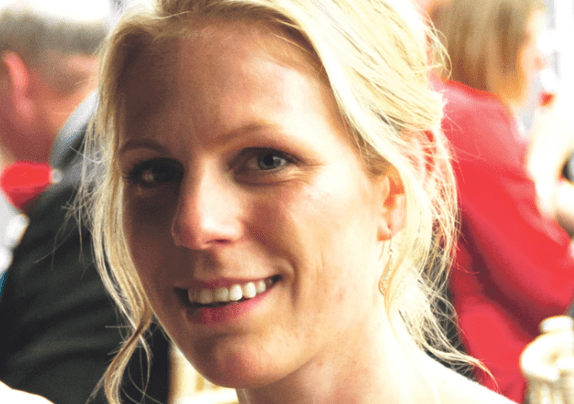
Ksenia Orlova, residente de Asgardia, médica e investigadora, pasó 366 días en confinamiento en una instalación sellada, contribuyendo a una investigación pionera sobre la respuesta del cuerpo femenino al aislamiento prolongado. La misiónterminó el 11 Sagitario 0008 (14 de noviembre de 2024), marcando uno de los experimentos de aislamiento más largos de la historia de la ciencia espacial y el primero en contar con la participación de cuatro tripulantes femeninas.
El reconocimiento de la Srta. Orlova subraya el compromiso de Asgardia con la promoción de la innovación científica y las valiosas contribuciones de sus residentes a este empeño. La colaboración de Asgardia con el IPBM sigue allanando el camino hacia la exploración del espacio profundo, demostrando que el sueño de vivir —y de prosperar— más allá de la Tierra está más cerca que nunca.
Existen teorías que sugieren que Jesús de Nazaret pudo haber nacido en marzo o abril, basadas en análisis de calendarios antiguos y referencias bíblicas. Estas teorías se apoyan en varios puntos:
Evangelios y pastores: En el Evangelio de Lucas, se menciona que los pastores estaban cuidando sus rebaños al aire libre en la noche del nacimiento de Jesús. Esto propone una época del año más cálida, como la primavera, ya que en diciembre, los pastores no estarían al aire libre debido al frío.
Calendarios Judíos: Algunos estudiosos han analizado el calendario judío y las festividades religiosas para estimar la fecha de nacimiento de Jesús. Según estos análisis, es posible que Jesús haya nacido durante la primavera, coincidiendo con la festividad de la Pascua judía, que se celebra en marzo o abril.
Censo de Quirino: El Evangelio de Lucas también menciona un censo ordenado por el gobernador Quirino. Algunos historiadores aseguran que este censo pudo haber tenido lugar en una época del año más favorable para viajar, como la primavera.
Por tanto, no es concluyente y tampoco considerado por la generalidad; para muchos, una vez modificado el calendario por el papa Gregorio, las cosas fueron de esa manera y no de otra.
Por tanto, ser analíticos con la cultura que nos precede es importante y les recalco: no importa la creencia o visión que tengan; lo que es cierto es que avanzamos hacia un nuevo ciclo de vida, y eso es esencial.
Ohou, queridos Asgardianos, ¡una humanidad, una unidad! Ohou, entusiastas del espacio y soñadores del cosmos, es un placer darles la bienvenida a un nuevo episodio de nuestro pódcast, Highway to Space.
El ministro Dan Profir, les invito a embarcarse en su próximo viaje interestelar, el Martes 1 de enero de 2025, a las 12:00 p.m. UTC. El título del episodio es “Arte Espacial: Cómo el Arte, la Espiritualidad y la Búsqueda de la Evolución Humana Convergen”.
Transcripción AL ESPAÑOL de las palabras de Dan Profir:
Nuestra invitada, Cheryl Gallagher, es una artista y música cuyo trabajo trasciende las fronteras de la música electrónica ambiental y las artes visuales. Las creaciones de Gallagher, impregnadas de profundidad espiritual y cualidades transcendentales, le han ganado un lugar en las comunidades de música new age y ambiental, así como en la comunidad de artes creativas.
Con una maestría en educación de adultos y experiencia en producción creativa digital, la música de Cheryl es una puerta de entrada a paisajes sonoros profundamente meditativos. Su composición a menudo mezcla la calidez del arpa con las texturas expansivas de los sintetizadores electrónicos, inspirando crecimiento interno y reflexión.
Las colaboraciones con artistas como Howard Given han producido álbumes aclamados por la crítica, conocidos por su intrincada superposición de sonidos y atmósferas de otro mundo. Más allá de la música, el arte visual de Cheryl, una fusión de arte digital, pintura y fotografía, refleja sus exploraciones espirituales y creativas.
Sus vibrantes diseños abstractos resuenan con las temáticas místicas de la música, reflejando su viaje hacia la iluminación y la expresión auténtica. Cheryl es miembro de la Asociación Internacional de Artistas Astronómicos.
Sus logros le valieron el cargo de ministra de Cultura en Asgardia, la nación espacial fundada en 2016 por el Dr. Igor Ashurbeyli, donde aplica sus talentos para crear un marco cultural extraterrestre sin precedentes.
Únanse a nosotros mientras nos adentramos en el universo del arte espacial, donde el arte, la espiritualidad y la búsqueda de la evolución humana convergen.
Envíen sus preguntas a asgardia.tv@asgardia.space, y elegiremos las más desafiantes, que serán respondidas por nuestra invitada.
Así que nos vemos en el próximo episodio de Highway to Space el martes 1 de enero de 2025, a las 12:00 p.m. UTC en Asgardia. Space, en Facebook, en Asgardia. En nuestra plataforma de YouTube, en Asgardia Space Nation TV.
You can discover more of her work in the Room Space Journal,Where she explains about:
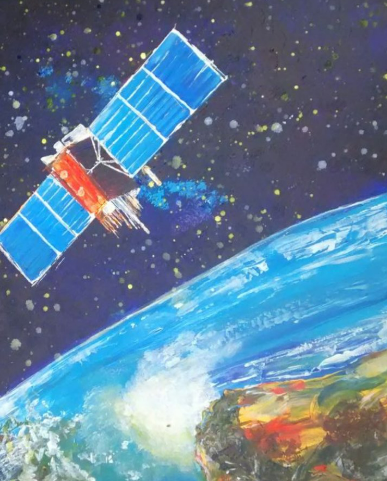
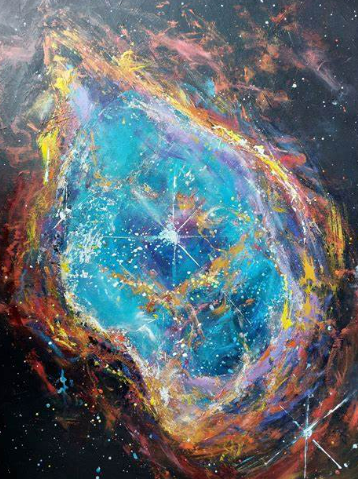
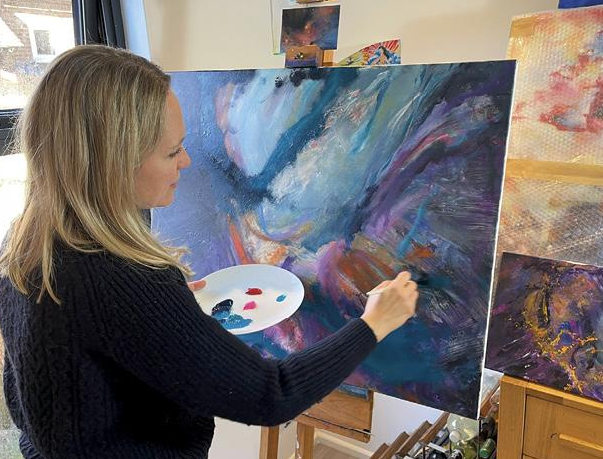
The photographic detail of astronomical imagery has inspired earthbound artists for decades — and the starry night for centuries before that. In this article, a British artist explains how she got into art and displays some of her recent creations.
In the other part of the article, she said:
I love colour — you need only glance at some of my work to realise this. My paintings, inspired by the incredible space imagery now available, aim to resonate with the energy of space and express the emotions that the imagery evokes in so many people. But I haven’t always been an artist.
I knew I wanted to contribute to the visual atmosphere of space technology companies, and I could do that by creating paintings.
All of you are invited to know more about her artistic space collaboration in the whole article in the Asgardian magazine Room Space Journal
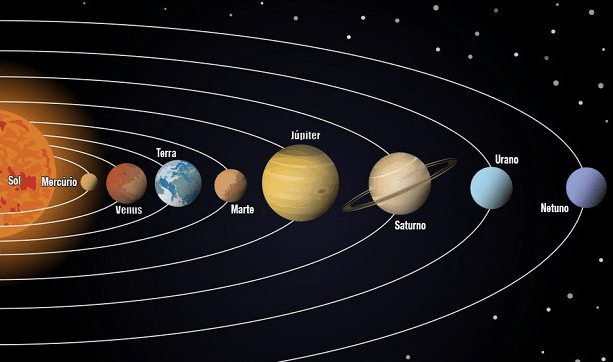
Hace algunas semanas en la asamblea legislativa Asgardiana, mencioné lo importante que resultó que nuestro jefe de la nación, Dr. Igor Ashurbeyli, decidiera elegir el nombre de nuestra moneda nacional como Solar.
Si fuera posible contemplar el magnetismo solar y su influencia en el arrastre de todos los planetas, la idea resulta fascinante. Imaginemos, de acuerdo con el arquetipo de cada planeta, qué resultado nos da.
1.— Conectar las comunicaciones.
2.— incentivar las cosechas.
3.— Colocarlas en el territorio que es necesario.
4.— Avanzar con emprendedores.
5.— Proteger los bienes y servicios.
6.—Regular y legislar contemplando el panorama creado.
7.— Crear estrategias de vinculación y enlaces.
8.— Finalmente, profundizar en el análisis de investigación alternativa y dinámica…
9.— Aquí nos han dejado sin Plutón por ser un planeta enano. Se trata del indicio del estratega, el cual no es evidente, pero este planeta es el arquetipo que sustenta la historia a largo plazo.
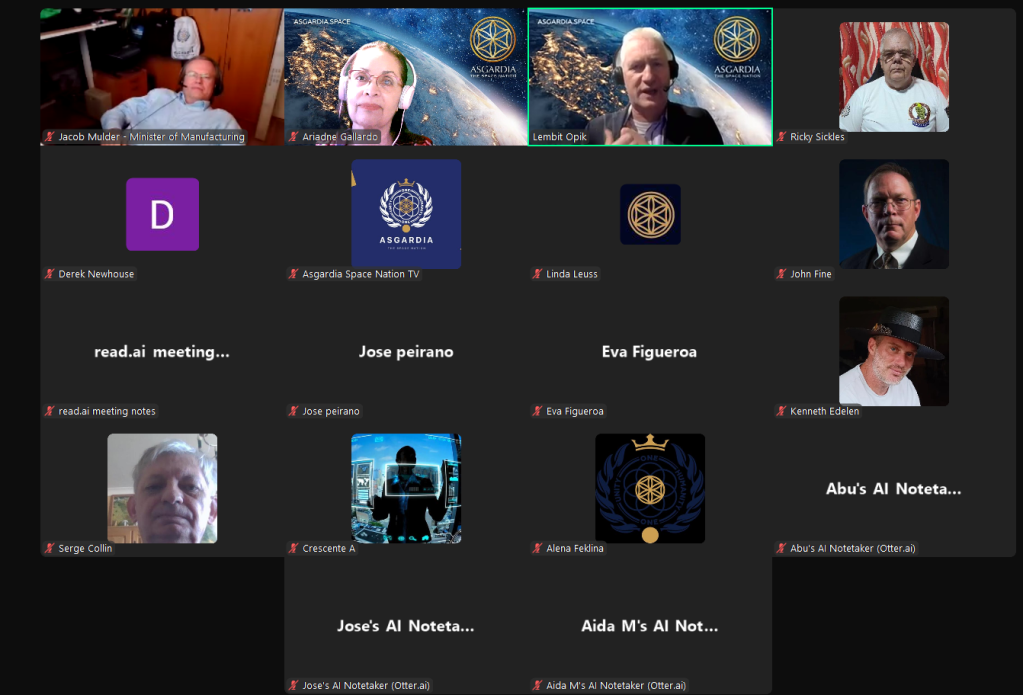
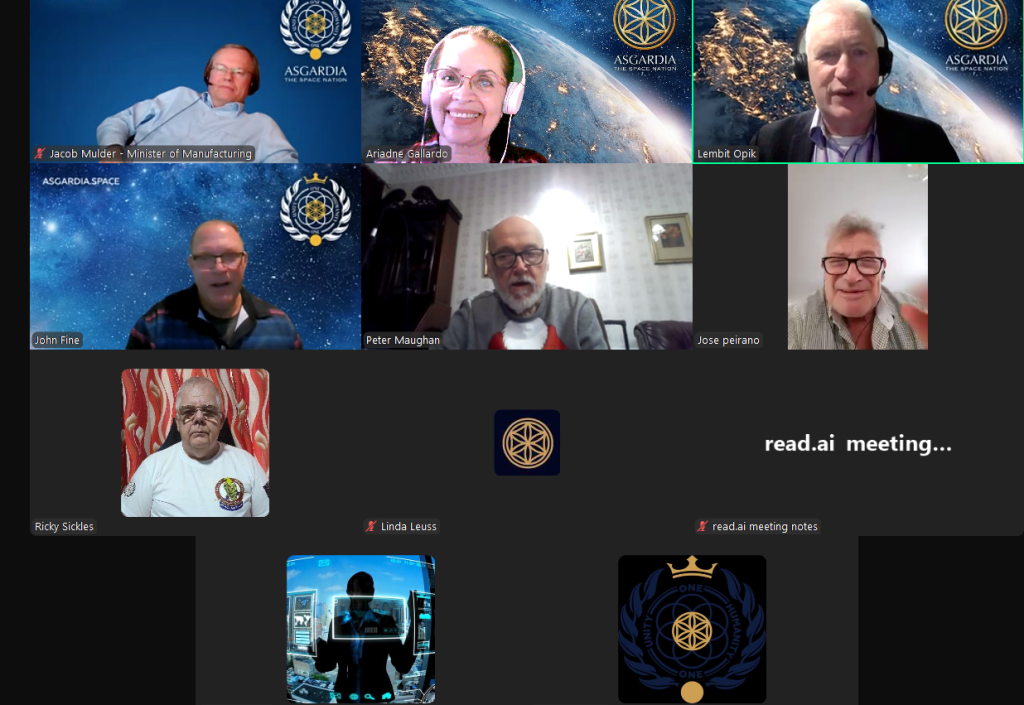
Lembit Opik proporcionó actualizaciones sobre la finalización de los documentos para la última sesión digital del Parlamento y describió el calendario de reuniones, señalando que no habrá reuniones el 26 de diciembre y el 2 de enero, cerraremos el año con una sesión de celebración de fin de año el 31 de diciembre y reuniones ordinarias que se reanudarán el 9 de enero.
Lembit expresó su confianza en la capacidad de John para gestionar las próximas tareas, incluida la sesión digital prevista para febrero de 2025, y pidió a la coordinadora del parlamento Linda Leuss, que enviara a John los documentos pertinentes sobre los actos, asegurando que facilitaría el intercambio de información.
John Fine anunció una nueva reunión el jueves para el grupo de revisión legislativa, que seguirá a la reunión de los presidentes de los comités, invitando a los patrocinadores del proyecto de ley a participar, al tiempo que enfatizó la necesidad de eficiencia.
Lembit confirmó los detalles del evento del Día de Año Nuevo e invitó a Ricky a ser el anfitrión, al tiempo que fomentó la comunicación abierta durante las vacaciones y promovió la participación en las celebraciones de Asgardia.
This idea arises from a photograph sent by my parliamentary colleagues Clive Simpson and Steve Kelly from an exceptional place in Portugal following their visit to the Space Economics Congress.
Photograph by the journalist and chief editor of Room Space Journal Clive Simpson from the Nova School of Business and Economics in Carcavelos, Lisbon.
What happens when we see the sky, and we find a fascinating accumulation of experience that ranges from the vision before the naked eye and that which gives us a higher value when we have a telescope in our hands?
Well, it happens that for some it becomes a comforting hobby and for others a profession that urges them to delve deeper into the wonders of the cosmos. The gaze of Asgardia has been placed in the minds of space explorers. It allows us to go searching for all those who have fortified the exciting vision of the one who moves among the stars with the qualification of expert or amateur.
Therefore, linking the idea of those who are organized and those who prefer to stay alone by their telescope, results in the fact that if they get the perfect shot, of course they will share it.
In the world we inhabit there are very astronomical old organizations, which over time have accumulated an inexhaustible wealth of information, published books and fascinating research. By becoming regular visitors to these places, we transform ourselves and recognize that we are part of their challenges and experiences.
This work, tentatively being named the cosmic swarm, will seek that connection where, among the honeycomb of one place in the world, we travel to the other end searching for the discovered wealth to share.
Let’s see the adventure as an invitation to a new honeycomb of astronomers, that place where we are not invited to its facilities until we are sure that we are suitable and committed enough to consider ourselves members.
Secondly, to achieve the qualification of feeling proud Asgardians integrated into that place where we share the living experience of observing the celestial bodies.
Later, the history that is shared is magnified in astronomical meetings, that space where we are not only members of an association, but we stand out as Asgardians who observe the sky.
After some time, it will be possible to build your own house in which the astronomy of the inhabitants of Asgardia will be strengthened, I think it is an interesting idea.
I share this idea with all my colleagues, followers, and residents of Asgardia and if any of you wish to give me your personal experiences, they will be welcome.
What strengthens groups is their adherence to common ideas and interests. For example, many of us share material on the official Asgardia website and on various sites on social networks. Imagine a mountain located in the world where each individual can gather to witness an annular eclipse, which is captured by the media. Asgardia t-shirts on all participants, the idea is nice and the best of all is that it can be real. It has already happened in the total eclipse that was observed in North America and possibly this March 14, 2025, something similar will happen in the place where that eclipse places its umbra.
It is nice to join and follow groups, but it is also nice to create an identity as tenacious and dedicated observers of astronomy.
What do we need? A fundamental part is the organization, usually the locations are expensive to travel to where the event is held. Many people follow the activities from meetings coordinated in videoconferences, another vital point is to recognize those interested and investigate their relationships with other astronomers.
Have some strategic incentive, a personalized page to share the image of the month and those that have been drawn or painted with artistic techniques and, of course, the contest of works on experiences and techniques used in their activities.
The attractive design of the reward and perhaps in time an incentive in kind, such as a new and dynamic telescope for the most professional fan of sky observation.
The word swarm comes from Latin, meaning “crowd” or “group of bees” in Latin.
Regarding the Indo-European root: The root “ex-” in Latin means “out of” or “from”, and “amen” is related to “to move” or “to stir”.
It is evident that examining something and moving to call the group to that place is something that bees do perfectly; they move in mass, moving towards the objective. I consider that this is the reason I find the term appropriate.
The sky makes the call from the location of the celestial bodies, and humans on earth coordinate their telescopes to capture one of the spectacular scenes that are presented at that moment.
For the distinguished and organized bees it is something similar, since not all the places they visit have the appropriate forest to collect honey. But when different environmental and climatic factors are present, they know perfectly well that they can invite the group to get the best of the harvest.
In the photo that we see from Lisbon, Portugal, masterfully captured by colleague Clive Simpson, we know that the conjunction of Venus and the Moon surprised us in a special way in different latitudes of the planet. It is undoubtedly a unique shot, since what we see now, on these dates of the month of December, is not Venus in conjunction, but Jupiter.
The opportunity, the precise moment and the attentive look at the sky are everything. Even the representative part of the luminaries highlights events that the world carries out without considering that sometimes their agendas are placed before the fortunate gaze of the stars.
Illuminating an event on space economy, under the conjunction of Venus, shows that each conference offered among the participants had a special resonance. Venus is ruled by Taurus, which protects what is conceived and with which it creates wealth. Likewise, it is interesting to note that another of its rulers is Libra, which emphasizes harmony and interpersonal relationships. I imagine that many of those convened at the aforementioned congress reached balanced and fair agreements.
Many astronomers pay attention to the mythological legends of these archetypes, others consider that it is not appropriate; the only thing I can say is that the sky is not the limit and that what historically precedes us will always have a value to the extent that we want to interpret it.