

by Ariadne Gallardo Figueroa
Discovering Clive Simpson’s work through his pre-presentation book has been a unique experience, especially for someone who usually writes in Spanish. His work raises numerous questions and reveals shocking surprises, but I must focus on one in particular: Is anarchy inevitable? Should we submit and accept what the future holds? These are unsettling questions that come to mind as I explore his work; I walk hand in hand with the woman who steers the ship, whose firm voice resonates in my thoughts as I reflect on the course of our society.
As we move forward, I realize that the uncertainty surrounding us is a mirror of our doubts and fears, posing an existential dilemma about order and chaos.
History seems to repeat itself, with cycles of frustration and hope marking the rhythm of our days, challenging us to find a balance between what we desire and what we fear. The horizon presents itself as a blank canvas, waiting to be painted with our dreams or our nightmares.
The magic a writer creates for their reader is that we can step into the shoes of each character, feel them as the essence of something that compels us to see ourselves reflected in them. Thus, we resonate with the scenes unfolding before our eyes. As we read, we become immersed in a plot that makes time and space lose their relevance, taking our thoughts to a place where the boundaries between fiction and reality blur. We can even imagine the annoying buzzing of mosquitoes that distract and frighten us with more than just their bite, feeling their presence almost tangible, like a shadow lurking in the darkness. We find ourselves in a vivid landscape, where each written word transforms the air we breathe into a sensation filled with emotions and memories, making us part of the story that unfolds with each new page.
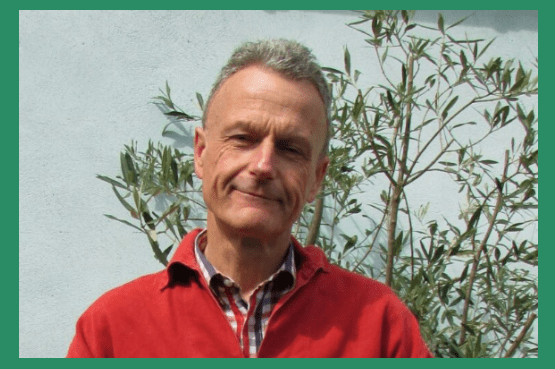
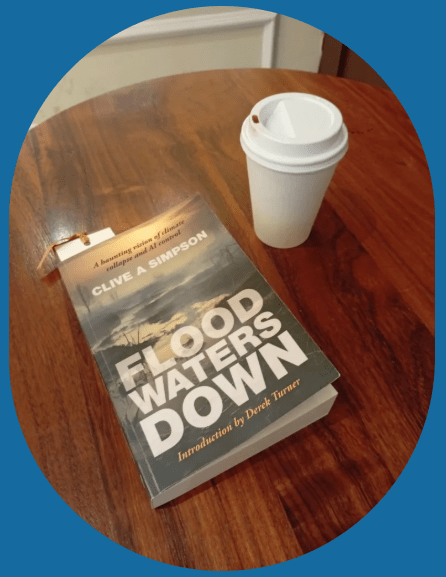
The opening pages invite us to explore Derek Turner‘s thinking. The invaluable contribution of the Irish journalist Turner, with his vast experience and knowledge, brings a unique perspective. His participation in the introduction has enriched the literary project, offering thought-provoking insights and highlighting how the author leads us to a logical conclusion considering contemporary trends.
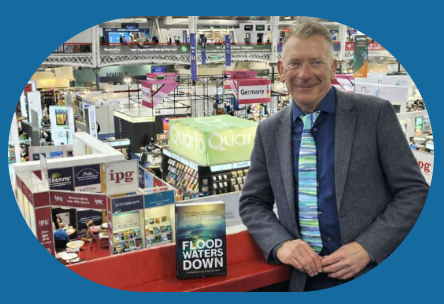
The book in its previous format has visited, along with its author, different spaces that will become venues where the work can be discovered by the eager curiosity of its readers.
Upon encountering this important work, the question that immediately arises is whether, as humanity, we need a leviathan in the deep waters…
Hobbes’s Leviathan theory imposes the unsettling idea that the State must be established as an absolute power, a necessary tyrant to prevent the unbridled chaos of the state of nature. Human existence would be reduced to a solitary, miserable, disgusting, brutal, and tragically brief struggle.
But what happens when there is a power that does not emanate from what the State establishes, but from everything that money and its cover allow?
The author is a man born under the sign of Pisces, and this reminds me that his environment called him to get involved in this story. Not because of his birth sign, but because of his commitment to the reality he inhabits daily.
In all of this, the fact that a writer is of this nature leads me to think of his profound research, of the cautious yet incisive gaze with which he discovers the glimmer of a detail. The environment as a drama that deserves to be brought to light and not remain in the profound silence of the floodwaters.
This commitment is evident not only in his stories but in every observation he makes, where he transforms the everyday into prose and the trivial into life lessons. Each word he chooses resonates with the power of his introspection, capturing the essence of the human experience in his writing, making the reader not only witness the story but become a part of it. Thus, his work becomes a bridge connecting the deepest emotions with the fragility of existence, challenging the reader to reflect on their reality while navigating the currents of the author’s soul.
Where can we observe the collective body of thousands of wills to which Hobbes refers? As an English philosopher, I can certainly focus on the scenes of an author who is also English and carries in his blood the genetic makeup that has woven the history of his nation.
Human beings, driven by distrust, competition, and glory, are visualized within Tulip Haven, a space that desperately tries to maintain an environment created for its dreams. A fragile environment where a handful of individuals seemingly transfer power to a common authority.…
In this sense, a prominent concept emerges that has impacted all of us to a greater or lesser extent: the incursion of artificial intelligence into the activities that we entrust to security, technology, and our future.
This phenomenon has transformed not only how we interact with machines, but also how we perceive the world around us. What we once considered a mere tool has evolved into an active participant in our daily lives, affecting everything from our simplest to our most complex decisions.
In this context, it is essential to reflect on what we give to the world and what lies hidden in the fragile reality that sustains us. Every technological advance brings not only benefits, but also ethical and existential challenges that we must face.
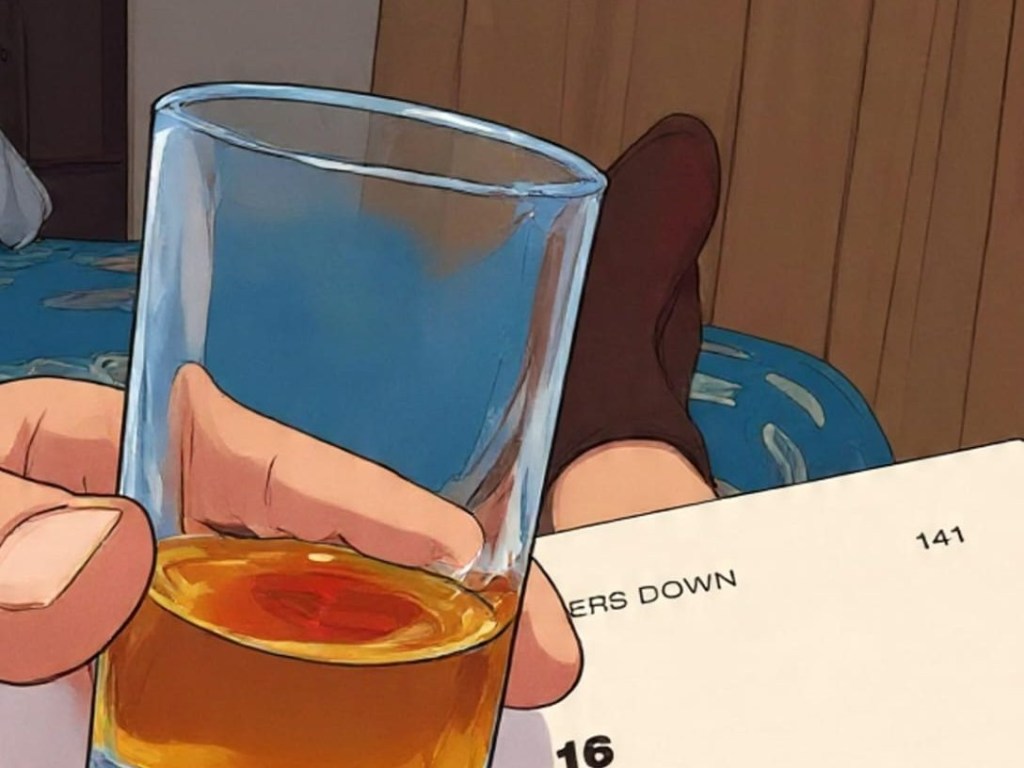
I arrive at that space where a vital character enjoys her drink and for her nothing is impossible, even above the predictions of her reality embodied in the figure of artificial intelligence.
Pages more or less, she returns and is observed with that power that does not recognize errors; the superiority of a finely tuned mind that has allied itself with the machine that cannot be less than she.
I keep reading, and I wonder: how much will we have to adapt to these changes, and what does it depend on? Undoubtedly, when one of the characters in “The Ark” warns:Learning to make allies as social beings is fundamental. Then I reflect that perhaps it is too late to avoid what nature shows us at every moment, but it is precisely in what nature itself points out that we will be able to understand what step we must take.
One of the most important people in Clive’s life is undoubtedly his wife, Margaret. I’m truly interested in knowing her opinion of Clive Simpson’s work. I often picture her in their garden, listening from afar as her husband types on his computer, and occasionally, he calls her over to share a paragraph or a chapter. She arrives smiling, setting aside her gardening tools to sit beside him and listen to what he has to say. Her attention to her husband’s work is a breath of fresh air, that spark where the work feels supported by her sincere and objective observation. Margaret. Her reflections are fundamental to me.
In response to my question, she answered me:
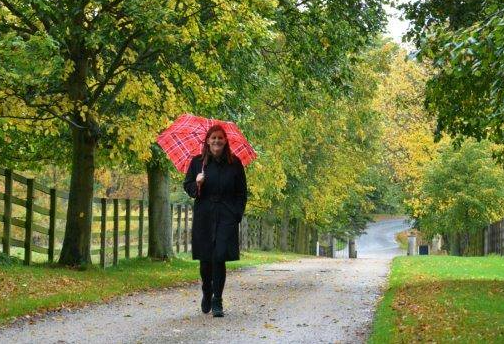
Hi Ariadne, I hope you’re well and had a good day. It’s been sunny here, which is unusual! I’ve been busy gardening, one of my greatest passions.
So here I am, trying to figure out what to tell you about my thoughts on Flood Waters Down. For me, Clive manages to create a real sense of place; we both grew up in the marshland landscape, with its vast plains and skies.
One grows up aware of the importance of the weather and tides in this environment. Clive also expresses the breakdown of society, community, and relationships. However, a thread of hope runs through the story: while some seek to destroy society and the environment for their gain, others seek to unite and resist, adapting to the inevitable changes brought about by climate change.
I’ve seen Clive work tirelessly to craft his story, making it relatable and thought-provoking. He brings to life one of the many scenarios we could face in the future. I hope people connect with the landscape and characters, and enjoy reading Flood Waters Down. Kind regards, Margaret.
I greatly appreciated your comments, and I thoroughly agree with your perspective on your beloved husband’s work.
Then I continue reviewing the paragraphs I have read and reflect:
Generally, at the end of our lives we hope that what we have managed to achieve will allow us to live with the confidence of security. We want to preserve the health we have left, and receive adequate care for a dignified old age.… The work hits the nail on the head and urges us to reflect on the path we have chosen as humanity, where the future is uncertain. None of the inhabitants of this planet could deny the fragility that resides within us.
We are actors on a stage where we build the structure that inspires us and protects us from everything we are as humanity, and from what could go wrong. It is under the monitoring of predictions and figures that observe the future, which make us part of history.
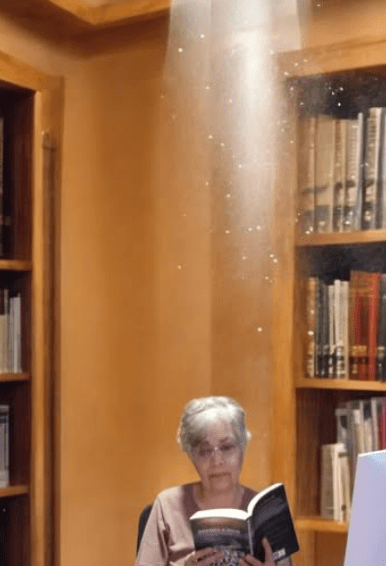
A beam of light shines toward the stars, revealing a path that could be a legacy in the face of an uncertain future. You’ll have to read the book to find out what I mean.
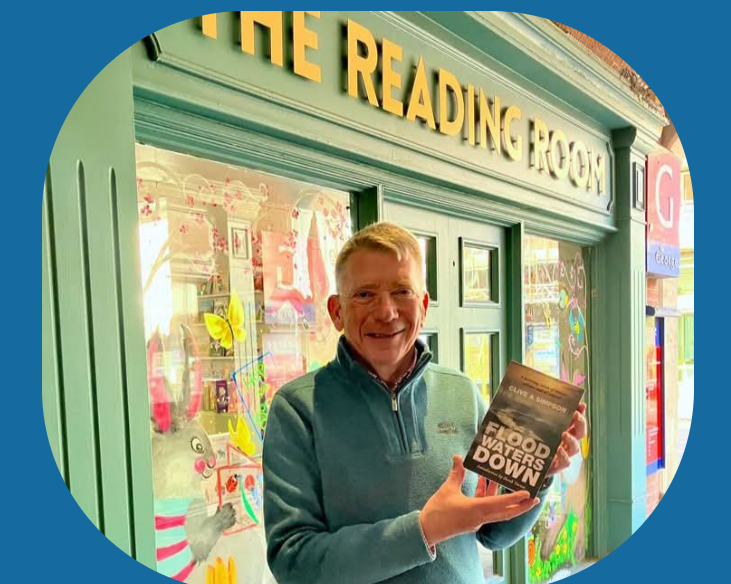
The Reading Room is a popular independent bookshop in Grantham that opened in February 2025. It has quickly become a community hub, recently winning Independent Retailer of the Year at the Grantham Business Awards. A welcoming space offering a carefully curated selection of titles, it’s also where visitors to The George Centre in Grantham, UK, will find the work of Clive A Simpson.
Flood Waters Down Book By Clive A Simpson, (Kobo eBook) | Indigo
Flood Waters Down by Clive A Simpson | eBook | Barnes & Noble®
Flood Waters Down | Waterstones
Clive Simpson and his ecological novel «Flood Waters …
Flood Waters Down | Cliftop Publishing
Descubre más desde Gaceta Asgardiana
Suscríbete y recibe las últimas entradas en tu correo electrónico.

