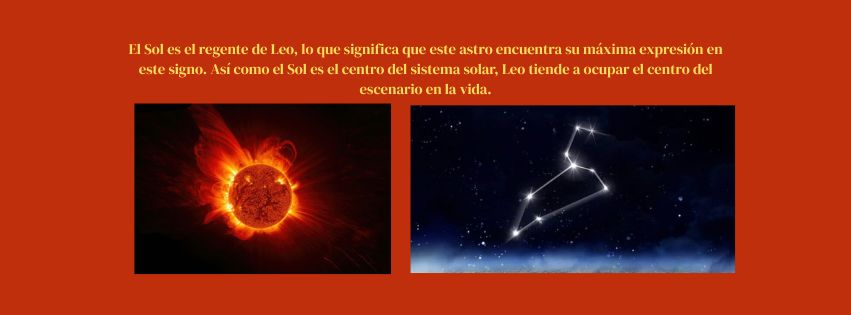
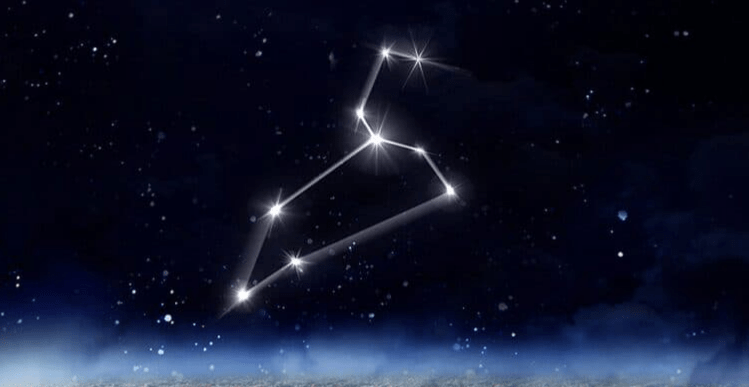
La constelación de Leo es una de las más reconocibles en el cielo nocturno, representando la figura de un león majestuoso. Se encuentra en el hemisferio norte y es visible principalmente entre marzo y mayo
Su estrella más brillante es Régulos, conocida como el “pequeño rey”, que marca el corazón del león
Leo está estrechamente vinculado con la mitología griega, en particular con el León de Nemea, una criatura invulnerable que Hércules derrotó en el primero de sus doce trabajos. Esta historia refuerza el simbolismo de Leo como un signo de valentía, fuerza y liderazgo.
Si nosotros celebramos el día de la unidad, el 1 de Leo, esto significa que lideramos con la unidad y eso es maravilloso. La unión de nuestras fuerzas y la colaboración entre individuos son esenciales para lograr un propósito común, y cada año, en esta fecha, nos recordamos el poder que tenemos cuando trabajamos juntos.
A través de actos de solidaridad y convivencia armoniosa, podemos fortalecer nuestros lazos y construir un futuro más brillante para todos. En este día tan especial, nos unimos no solo en teoría, sino también en acción, promoviendo una cultura de inclusión y respeto que trasciende las diferencias que nos pueden dividir.
Estamos invitados Asgardianos y seguidores, un momento muy especial es este maravilloso mes. Les invito a leer las palabras del ministro de educación, conductor y productor de Autopista al Espacio.
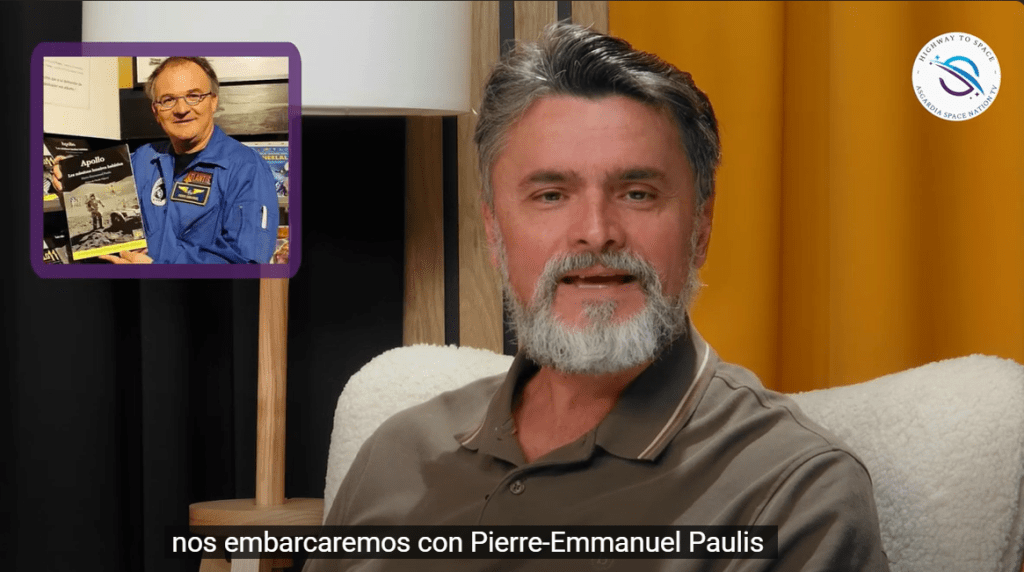
¡Este junio, los cómics se unen al cosmos! Únete al presentador Dan Profir para dar la bienvenida a Pierre-Emmanuel Paulis —instructor de astronautas, dibujante de cómics, defensor de la educación espacial y presidente de la Mars Society Belgium— en un episodio muy especial de Autopista al Espacio.
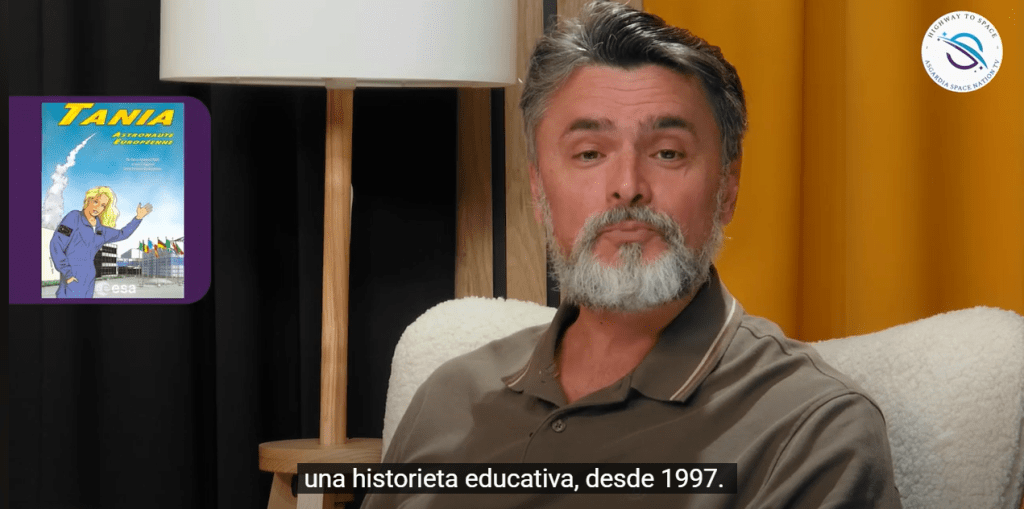
Descubre la historia detrás de TANIA, Astronauta Europea, la querida serie de cómics que da vida al espacio desde 1997. Descubre cómo Pierre-Emmanuel utiliza el arte, la narrativa y la formación práctica para inspirar a las futuras generaciones de exploradores.
El episodio completo se emitirá el 17 de junio de 2025 a las 12:00 p. m. UTC.
El productor, conductor y ministro de educación en el gobierno de Asgardia hace la presentación de su siguiente entrevista
🚀 El episodio completo se estrena el martes 20 de mayo de 2025 a las 12:00 UTC. 🎥 Mira el tráiler ahora y revive este increíble momento.
El 2 de marzo de 2025 se hizo historia cuando la nave de Vida Pirámide de Asgardia aterrizó en el Mare Crisium de la Luna, llevando el legado de la humanidad a las estrellas.
En este episodio especial de Autopista al Espacio, el presentador Dan Profir se reúne con Cheryl Gallagher, ministra de Cultura de Asgardia, y Lembit Opik, presidente del Parlamento, para hablar sobre este evento revolucionario. Juntos, exploran cómo el arte, la gobernanza y la tecnología de vanguardia convergieron para hacer historia, y lo que esto significa para nuestro futuro entre las estrellas.
Transcripción al español:
Escuchen, entusiastas del espacio y soñadores cósmicos, levántense para hacer historia: el 2 de marzo de 2025, la humanidad grabó su legado en la luna cuando la pirámide dorada de LifeShip logró que los símbolos de Asgardia aterrizaran en Mare Crisium.
En nuestro próximo episodio, reviviremos este triunfo con Cheryl Gallagher, ministra de Cultura de Asgardia y la mente artística detrás de la cápsula del tiempo cósmica, y Lembit Opik, presidente del Parlamento, quien celebró su 60.º cumpleaños plantando los sueños de una nación en el suelo lunar.
Juntos, desglosaremos cómo el arte, la gobernanza y la tecnología de vanguardia se unieron para salvaguardar el legado de la Tierra y lo que significa para nuestro futuro entre las estrellas.
Prepárense para un viaje desde el rugido del Cabo Cañaveral hasta las llanuras silenciosas de la luna. Esto es Highway to Space, donde los grandes saltos de la humanidad cobran vida.
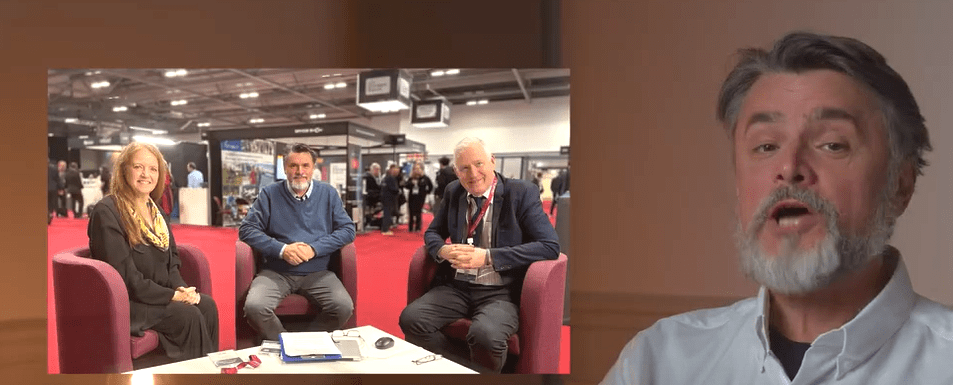
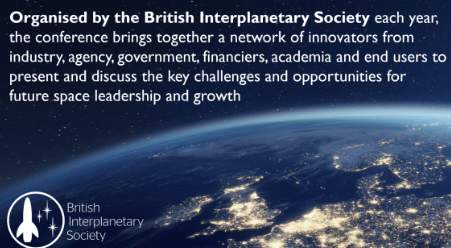
El argumento de la conferencia de este año es El contexto rápidamente cambiante del espacio global y se centrará en los desafíos y cuestiones emergentes que presenta el aumento de las actividades financiadas comercialmente, los avances en la tecnología y los rápidos cambios recientes en las relaciones internacionales:
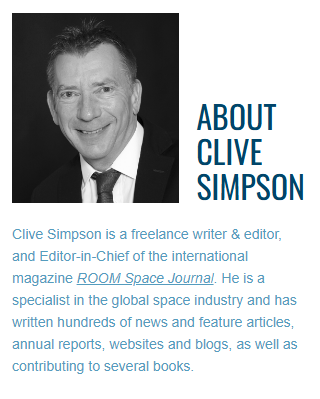
¿Cómo afrontar las inundaciones? Es una de las preocupaciones de los habitantes del Este del Reino Unido, tal como lo expresa Clive Simpson en su nuevo estudio sobre el tema.
En últimas noticias, el periodista ha señalado:
El último informe del IPCC advierte que el Reino Unido no está preparado para las crecientes amenazas climáticas, que incluyen aproximadamente una de cada cuatro propiedades afectadas por un mayor riesgo de inundaciones.
En mi próxima novela, Flood Waters Down, exploro un mundo del futuro cercano que lidia con los efectos del colapso climático junto con las consecuencias no deseadas de la gobernanza de la IA.
Es una historia distópica sobre la supervivencia, la desconexión moral y la resiliencia de las comunidades frente al fracaso sistémico.
Si bien son los gobiernos los que controlan los sistemas de satélites, esta novela ha de poner el foco en problemáticas esenciales. No basta con conocer la realidad, es necesario que lo que se ve arriba sirva a los que habitan la Tierra sin distinción.
En los medios leemos conceptos muy interesantes, como, por ejemplo:
La inteligencia artificial está revolucionando la forma en que monitoreamos la Tierra, permitiendo una observación más precisa y en tiempo real de nuestro planeta. Por ejemplo, IBM y la Agencia Espacial Europea han desarrollado TerraMind, un modelo de IA generativa que integra datos satelitales para mejorar el monitoreo ambiental y predecir riesgos climáticos con una precisión sin precedentes.
Además, la IA se usa para detectar deforestación ilegal, contaminación del aire, pesca furtiva y respuesta a desastres naturales. Gracias a la combinación de imágenes satelitales, sensores automáticos y drones, los científicos pueden analizar patrones ambientales y tomar decisiones más informadas para la conservación del planeta.
También se están desarrollando nuevas tecnologías de observación, como sensores avanzados en satélites, que mejoran la cobertura global y la precisión de los datos recopilados. Esto permite transformar grandes volúmenes de información en conocimientos prácticos para enfrentar el cambio climático.
They all form a compelling and clear team. Observing from a distance is not easy, but it is essential and attractive for analysing possible habitable worlds in the future.
Remember that Ariel is a European Space Agency (ESA) space mission dedicated to the study of exoplanets. Its name comes from the acronym Atmospheric Remote-sensing Infrared Exoplanet Large-survey.
They have sent their monthly newsletter of their activities, and I am pleased to share it with you.
Ariel aims to analyse the chemical composition and thermal structure of approximately 1,000 exoplanets using observations in visible and infrared wavelengths. This allows scientists to better understand how planets form and evolve, as well as the influence of their stars on their development.
Issue 48 – May 1st, 2025
Dear ExoClock participants, I hope you are all doing well!
We would also like to welcome the new members!
We send out a newsletter like this every month, while you can read the past newsletters, watch the past meetings, and have access to other educational material at:
We organise meetings dedicated to new ExoClock members. These meetings are held just after our regular monthly meeting. The beginner’s meeting is usually held on a Friday, one or two weeks after the monthly meetings. In these meetings, newcomers can ask questions of any level related to the operation of the website, observations of transits, data analysis etc. Note that these meetings are not recorded.
3. Data analysis “Removing outliers in data analysis”
4. Ariel Payload status update
1
1. Announcements
1.1 New HOPS manual released
We’re pleased to announce the release of the latest manual for the HOPS software. This comprehensive guide covers every step of data analysis using HOPS, with detailed explanations for each part of the process. You can access the new manual on the ExoWorlds Spies website:
Special thanks to Panagiotis Batsela, member of the literature team, for her effort in testing HOPS and helping us to update the manual!
1.2 Next ExoClock publication
We are ready to submit our latest publication
ExoClock Project IV: A Homogeneous Catalogue of 620 Exoplanet Ephemerides for the Ariel Space Mission
This paper incorporates around 30,000 data points to update the ephemeris for 620 exoplanet targets that Ariel will observe.
The extensive analysis strongly suggested that about 45% of these targets needed updates, which is crucial for the mission’s success.
This work highlights the important role of the Ephemerides Working Group and the impact of your contributions to ExoClock in making the Ariel mission as efficient as possible.
Thank you everyone for having taken action and to those that have sent us your comments! Presently, we are collecting all co-authors’ approval to be able to submit the paper soon.
If you are a co-author, you have received emails with details, please respond and act by singing the approval box, it is mandatory to get this before the submission.
1.3 Fifth Annual ExoClock Meeting
As many of you know, every year since 2021, we have been hosting our annual ExoClock meeting in a hybrid format at various locations across Europe.
2
This event is a fantastic opportunity for the ExoClock community to come together, connect with other members, Ariel scientists, deepen our understanding of the project and the mission, and of course, have fun.
Last year, we had a wonderful time in Lisbon. It was particularly special because it coincided with the Ariel consortium meeting, allowing many Ariel scientists to engage directly with our community. The synergy was so beneficial that we are eager to replicate this experience in future gatherings.
Looking ahead to this year, we are currently considering several potential locations for our next meeting, including Madrid, Spain, and Florence, Italy. Your input is invaluable to us, and we encourage you to let us know your thoughts by filling in the following survey:
The Euro planet Science Congress (EPSC), Europe’s largest conference for planetary sciences, together with the Division for Planetary Sciences (DPS) will host a joint meeting. This event will take place in Helsinki, Finland, from 7 to 12 September 2025. The conference aims to bring together people from different backgrounds, engaged in planetary science and missions, fostering scientific discussions, interactions, and networking opportunities.
We invite researchers, students, amateur astronomers and citizen scientists to share new projects and developments of previous ones, in the context of promoting open and public science.
If you’re interested in presenting, please submit an abstract for your project. We look forward to an engaging exchange of ideas and would be delighted to see your contributions.
Please spread the word about this opportunity within your networks and relevant communities! The deadline to submit your abstract is Wednesday, 7th May 2025.
3
1.5 Synchronous observations campaign
Synchronous Observations are used to study simultaneously transit observations of challenging exoplanet targets to increase the S/N. These are often cases where single-site observations may be insufficient due to low signal-to-noise ratios, long transit durations, or other observational difficulties.
By observing the same transit from multiple locations at the same time, we ensure better coverage and data reliability, helping to confirm transits and refine ephemeris for otherwise hard-to characterize systems. This month, we are organising a campaign for TOI- 5704b:
• The transit event happens on the 6th of May, 20:24 UTC to 00:54 UTC. • It is an alert target that we would like to track and a good chance to explore the synchronous technique
• Use a red photometric filter, a luminance filter, or no filter at all join the campaign if you have a telescope of 8 inch (ca. 20 centimetres) and above!
Remember that the transit event will not appear in your scheduler! To check whether the transit is observable from your location and the exact time, please consider using the ex-worlds-spies scheduler at:
You have to indicate a telescope of 30 inches (0.76 m), and otherwise it will not appear.
If you manage to observe the transit, please submit the light curve as usually to ExoClock and include to the section of comments: “This is part of the synchronous campaign”.
We will also send you a reminder closer to the date!
2. ExoClock in the class
We’ve often showcased how ExoClock serves as a perfect example of a hands-on project for students eager to learn about exoplanets. High school students are proving that the project isn’t limited to higher education. They get to experience modern astronomy first-hand, sparking both fun and inspiration as they consider their future careers.
For the third consecutive year, Adrian Jones, an active ExoClock observer and member of the review team, has led a remarkable project at Newland Girls’ School for their 12th-grade class. The students used two datasets for their study—one from Adrian and another data set from Yves Jongen, who both generously provided observing time.
The project turned out to be a gigantic success, resulting in two transit observations being published in the school’s name. To date, the school has contributed six observations to the ExoClock project. This initiative enhances their learning and contributes data to ExoClock. These are also the highlighted observations for this time!
4
3. Data analysis “Removing outliers in data analysis”
When analysing data with HOPS, it’s important to be cautious about manually removing outliers. While it might be tempting to delete data points to achieve cleaner light curves, this practice can lead to more harm than good from a statistical standpoint. Manually removing outliers can introduce bias, skewing the results.
It’s essential to understand that the observations we deal with often contain red noise, unlike pure Gaussian or white noise. Red noise includes systematic patterns, such as small bumps, which are usually related to equipment issues or weather conditions. When red noise is present, removing 3- sigma outliers isn’t advisable because it means clipping the distribution and possibly discarding valid data that reflects underlying phenomena, even if they aren’t the astrophysical signals we’re targeting.
Rather than removing outliers based solely on visual inspection of light curves, it’s more appropriate to evaluate the original frames. If certain frames are compromised by factors such as cloud interference, street lights, or inadequate guiding, then those frames should indeed be removed. By focusing on the quality of frames rather than the light curves, you prevent the introduction of manual biases and preserve the integrity of the data.
5
4. Ariel payload status update
by Salma Fahmy, Ariel Mission Payload & AIV Manager:
The development of the Ariel spacecraft continues to proceed well.
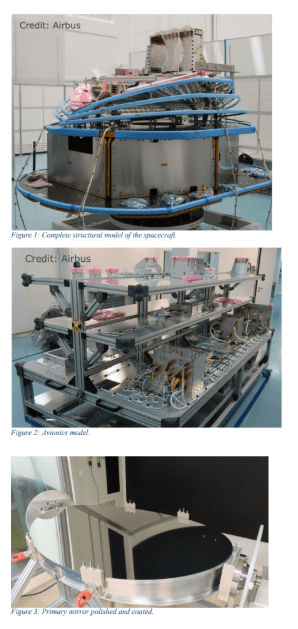
A major milestone was achieved at the end of 2024 with the testing of the spacecraft Structural Model, which is a fully mechanically representative model of the spacecraft (see image 1, next page). It was successfully subjected to vibration testing to demonstrate that it can survive the launch!
This model also allowed a dry run of the integration and alignment of the payload with the spacecraft Service Module, which went smoothly. The results of the tests are being analysed and used to correlate and update the Finite Element Model of the spacecraft to improve its fidelity.
In parallel to this, the Avionics Model, which will be used to test the data handling and electrical functioning of the spacecraft, is gradually being put together. The Onboard Computer is the first unit to have been delivered to Airbus in Toulouse. All the cabling has also been built. The payload units are being built and planned to be delivered in June this year. Preliminary models of the Instrument Control Unit, the Detector Control Unit, and the Telescope Control Unit are currently being tested together by the payload teams. This allows to verify that these electronic units can correctly communicate with each other before they are all delivered to Airbus for the avionics test bench. Image 2 shows the Avionics Test Bench at the S/C Prime’s premises in Toulouse.
Meanwhile, on the telescope, all mirrors for both the Structural and Engineering models have been manufactured, polished and coated (see image 3 for the primary mirror). All the telescope structural elements have also been manufactured and will now have the surface finishes (black coating) applied before the assembly of the telescope Engineering Model starts.
Instrument teams are also busy preparing for their Critical Design Reviews, which will be held during this year. Once these reviews are successfully concluded, it will give the green light for manufacturing of the remaining Flight Model parts!
In the next page you can find some photos demonstrating the progress of the spacecraft development!
You can watch Salma talking in the following link, which was featured in the consortium meeting in Lisbon.
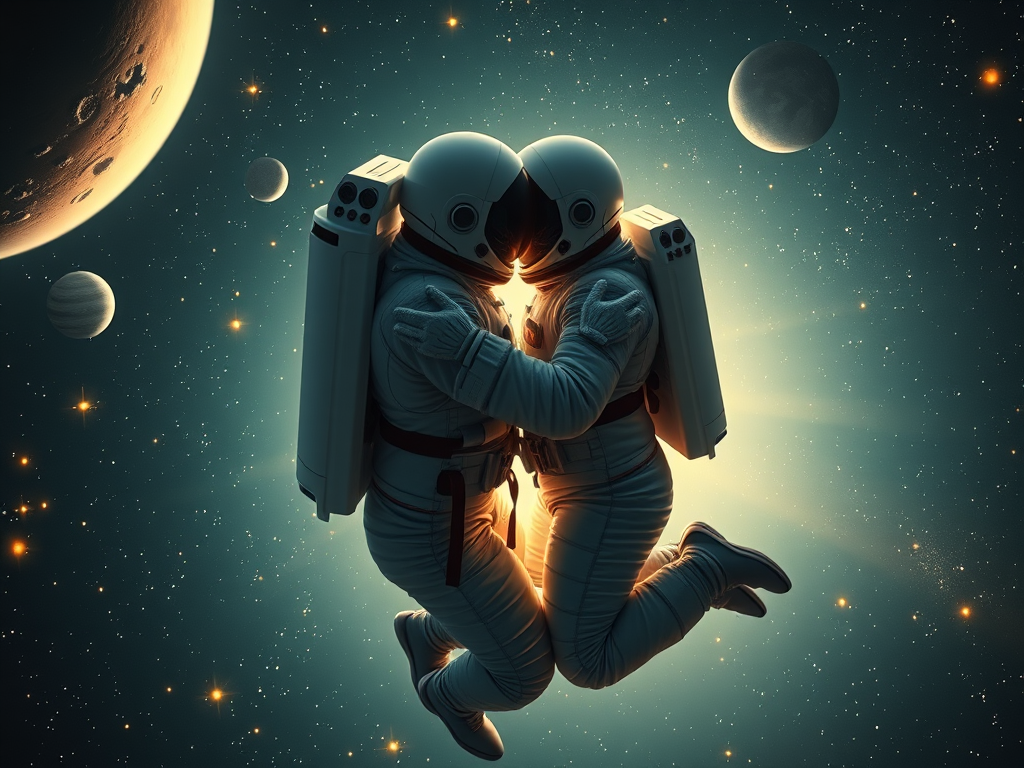
Human sexual activity in the weightlessness of outer space presents difficulties due to Newton’s third law. According to the law, if the couple remain attached, their movements will counter each other. Consequently, their actions will not change their velocity unless they are affected by another, unattached, object. Some difficulty could occur due to drifting into other objects. If the couple have a combined velocity relative to other objects, collisions could occur. The discussion of sex in space has also raised the issue of conception and pregnancy in space.[4][5][6][7]
As of 2009, with NASA planning lunar outposts and possibly long-duration missions, the topic has taken a respectable place in life sciences. Despite this, some researchers have argued that national and private space agencies have yet to develop any concrete research and plans to address human sexuality in space.[8][9] Dubé and colleagues (2021) proposed that NASA should embrace the discipline of space sexology by integrating sex research into their Human Research Program.[9] Santaguida and colleagues (2022) have further argued that space agencies and private companies should invest in this discipline to address the potential for sexual harassment and assault in space contexts.[10]
Numerous physiological changes have been noted during spaceflight, many of which may affect sex and procreation, notably circulation and the flow of blood within the body. Such potential effects would likely be caused by a culmination of factors, including gravitational changes, planetary and space radiation, noise, vibration, social isolation, disrupted circadian rhythms, or mental and physical stress.[11]
Gravity and microgravity
The primary issue to be considered in off-Earth reproduction is the lack of gravitational acceleration. Life on Earth, and thus the reproductive and ontogenetic processes of all life, evolved under the constant influence of the Earth’s 1ggravitational field. It is important to study how the space environment impacts critical phases of mammalian reproduction and development, as well as the events surrounding fertilization, embryogenesis, pregnancy, birth, postnatal maturation, and parental care.[12]
Studies conducted on rats revealed that, although the fetus developed properly once exposed to normal gravity, rats raised in microgravity lacked the ability to right themselves.[13] Another study examined mouse embryo fertilization in microgravity. Although this resulted in healthy mice, once implanted at normal gravity, the fertilization rate was lower for the embryos fertilized in microgravity.[14] As of 2006, no mice or rats had developed while in microgravity throughout the entire life cycle.[15]
In 2006, American novelistVanna Bonta invented the 2suit, a garment designed to facilitate sex in weightless environments such as outer space, or on planets with low gravity.[5][16] The 2suit was made of a lightweight fabric, with a Velcro-lined exterior, which would enable two people to securely embrace.[17] However, Bonta stressed that the 2suit was versatile, and was not intended for the sole purpose of sex.[18] Functionality testing was conducted in 2008 by Bonta aboard G-Force One, a low gravity simulator. It took eight attempts for the two test participants (Bonta and her husband) to successfully embrace one another.[19] According to science author Mark Thompson, the 2suit was cumbersome but moderately successful, and it is not clear whether it will have practical value for future space travellers.[20] The 2suit has been covered in the TV series The Universe, as well as a 2008 History Channel television documentary.[21][22] It has also been discussed by online writers.[23][24]
The problem is not, as one might expect, mechanical, although since no one has tried to make love to space, we do not know very well how it might work.
The main concern with loving couples in orbit is the conception of a child and the effects that microgravity and radiation could have on the mother or the baby.
However, an innovative experiment on the International Space Station has demonstrated the normal development of mouse embryos while in orbit, suggesting that human embryos may also develop under the same conditions.
Sex in Space: How Do You Do It? The honest answer is… Nobody knows.
As far as NASA, ESA, Roscosmos, and other space agencies are concerned, the official line is that no one has ever done it in space.
Unfortunately, for one journalist, a hoax about space sex once made headlines.
In 2000, respected science writer Pierre Kohler fell for a story claiming that both NASA and Roscosmos had conducted separate experiments during which two astronauts had a bit of space sex, finding only four positions achievable “without mechanical assistance.”
The project was apparently codenamed STS-XX. Computer simulations were used to test 20 sex positions, with the 10 best selected for a real-life experiment.
“Two guinea pigs tested them under actual zero-gravity conditions,” Mr. Kohler said. “The results were videotaped, but they are considered so sensitive that even NASA only received a censored version.”
While four positions were deemed viable, the remaining six, including a classic one, required a special elastic belt and an inflatable tunnel to function.
“One of the key discoveries was that the so-called classic missionary position, which is so easy on Earth when gravity pulls down, is simply not possible,” said Mr. Kohler.
Unfortunately, it was later discovered that none of the experiments were carried out.
Nos hemos acostumbrado a no alterar los sentidos y permanecer con los pies sobre la tierra que nos dice que estamos en territorio seguro.
Meditando sobre el video realizado en la entrada anterior, medito en las repercusiones de algo fuera de lo que se conoce como apropiado, pero esto de imaginar lo imposible deja de serlo cuando no nos detenemos a meditar sobre la importancia que tiene estar con los pies sobre la tierra.
Entonces, para muchas personas, incluso para profesionales destacados, la idea es compleja: imaginar que la gente deja de relacionarse con ética laboral en la órbita y sucumbe ante algo que le sucede al cerebro de las personas que se enamoran. Esta transición no solo afecta la forma en que trabajan, sino que también transforma sus prioridades y valores. El enamoramiento puede desdibujar la línea entre lo personal y lo profesional, llevando a algunos a obsesionarse con sus sentimientos en detrimento de sus responsabilidades laborales. A medida que las conexiones emocionales se intensifican, la productividad puede verse comprometida, y la ética de trabajo se convierte en un mero recuerdo en medio de la euforia del amor.
Considerando este esquema en un sitio que necesita de toda la atención de sus miembros activos, es una locura meditar sobre el sexo en condiciones no habituales a cada uno de los seres humanos.
Sin embargo, es algo que tarde o temprano se presentará, no por los miembros responsables de una tripulación, sino por personas que se tomen muy en serio la posibilidad de adentrarse en esto que se antoja, complejo y más allá de todo lo conocido hasta ahora.
En verdad, espero que la idea se considere por parte de los residentes de Asgardia, especialmente aquellos que son redactores creativos y los que han puesto atención al detalle en sus obras. La importancia de esta reflexión radica en que no es posible ver al sexo como parte de una actividad alejada del enamoramiento, ya que ese es un impulso vital que fundamenta muchas de nuestras relaciones y conexiones interpersonales.
Este aspecto humano no solo enriquece nuestras experiencias, sino que también nos conecta emocionalmente con los demás, fomentando el entendimiento y la empatía. Al contemplar el sexo en el contexto del amor y el afecto, se abre un abanico de posibilidades para explorar no solo nuestras pasiones, sino también la profundidad de nuestras emociones y el significado que estas tienen en nuestra vida cotidiana.
Las grandes proezas y pasiones de todo humano se han dado bajo el contexto de una emoción vital hacia lo que hace, y pensar en procrear en la órbita nos lleva a un camino nuevo y diferente.
Este impulso primario no solo nos permite explorar nuestras capacidades creativas, sino que también nos conecta con la historia y el legado de nuestra especie.
Cada acción, cada decisión, se convierte en una huella que nos une con aquellos que vinieron antes que nosotros, así como con las generaciones que vendrán. Es en esta danza entre el pasado y el futuro donde encontramos el significado de nuestra existencia y el valor de nuestras aspiraciones en un universo que constantemente nos desafía a trascender nuestros límites.
El NEAF (Northeast Astronomy Forum) es uno de los eventos más destacados en el mundo de la astronomía y el espacio. Este foro anual reúne a profesionales, aficionados y entusiastas de la astronomía para compartir conocimientos, explorar las últimas tecnologías y disfrutar de actividades relacionadas con el cosmos.
Este evento incluye:
Conferencias de renombrados expertos en astronomía y exploración espacial.
Talleres educativos para principiantes y actividades STEM para estudiantes.
Una exposición de 90,000 pies cuadrados con los principales fabricantes y vendedores de equipos astronómicos.
Observaciones solares, sorteos, premios y actividades para niños.
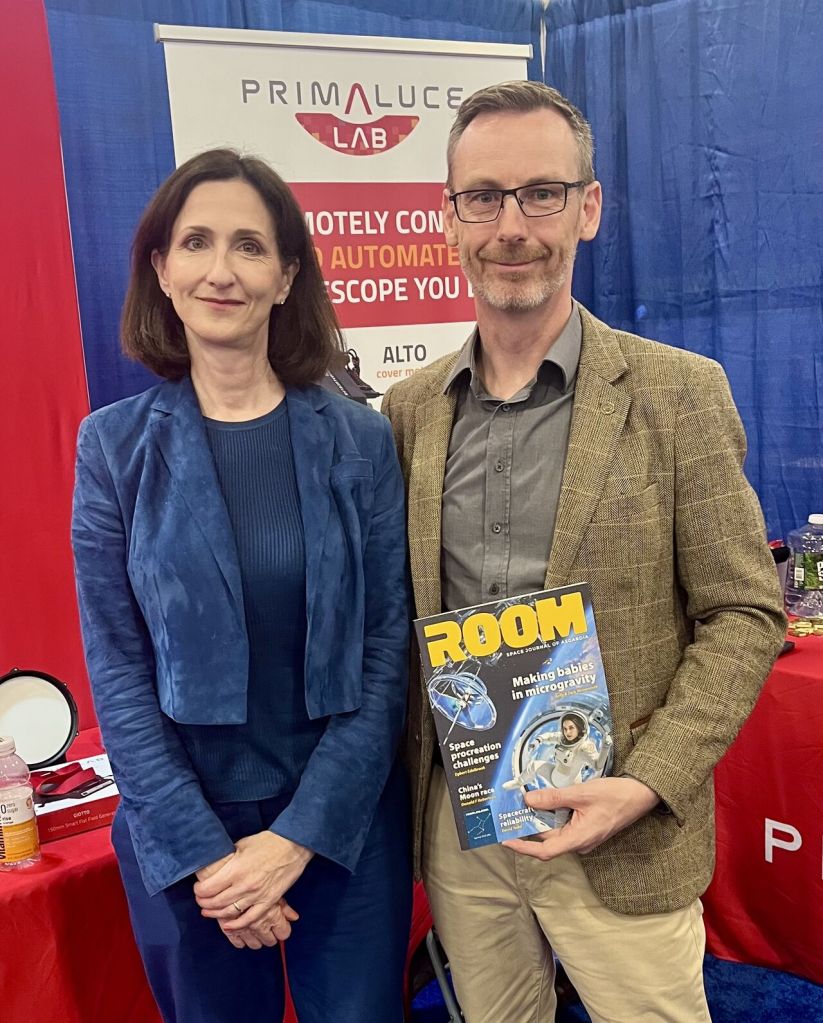
Steve Kelly, director de diseño de la revista Room Space Journal, ya está en el evento; le vemos aquí con la profesora experta en estudio de exoplanetas, Sara Seager de la Universidad de Cambridge, Massachusetts, Estados Unidos.





 Issue 48 – May 1st, 2025